
Protection, explained
Technology you can connect to the hazard.
Detailed, practical knowledge for safety managers, buyers and wearers—from DOSH–SIRIM approval and EN ISO 20345 to sole compounds, toe caps, insocks and electrical properties.

Standards & certification
A practical guide to the standards, approval pathways and model-specific documents used when buying certified safety shoes and boots.
Read detailed guide →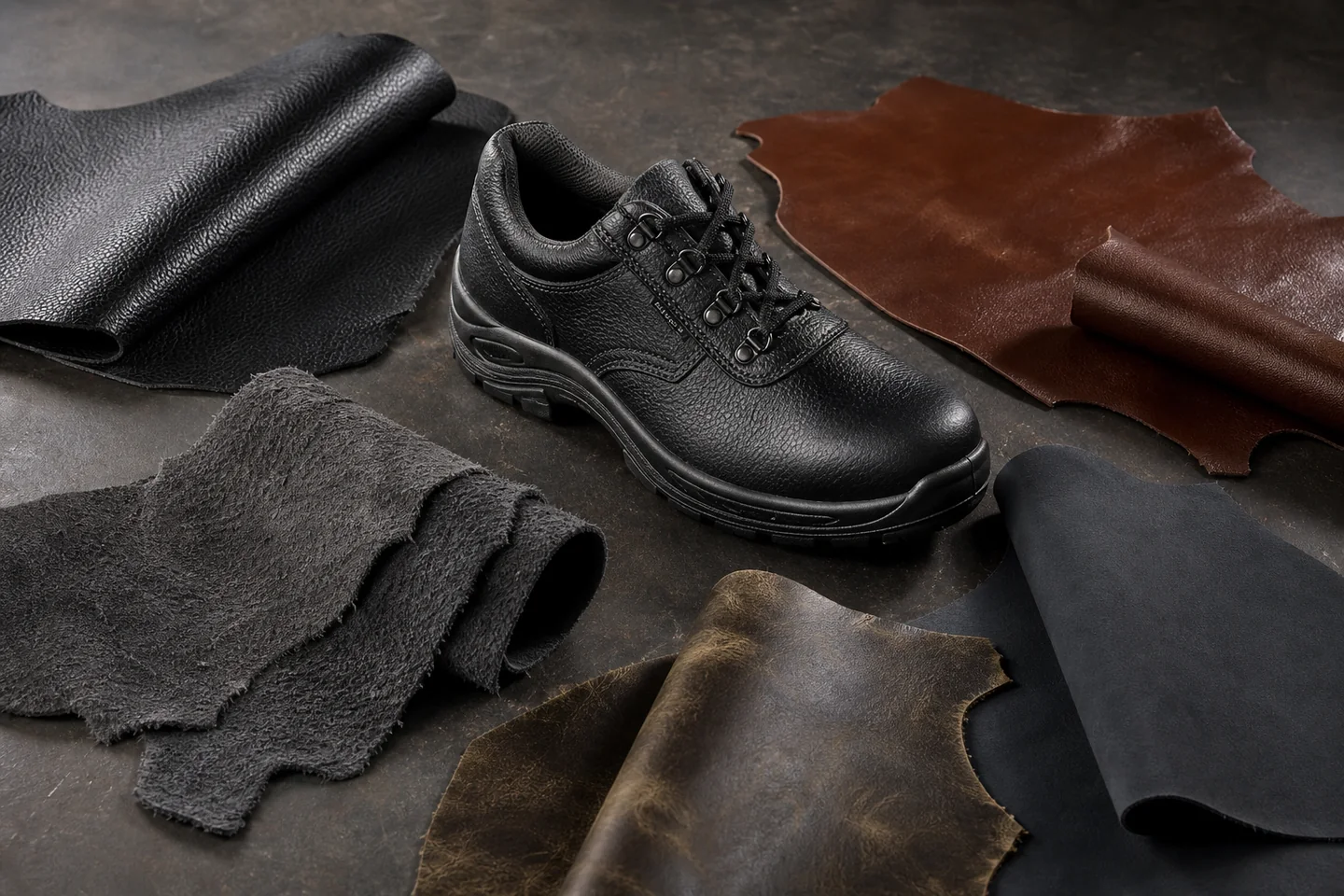
Upper materials
Compare leather and synthetic safety shoe uppers by durability, climate, maintenance, appearance and industrial application.
Read detailed guide →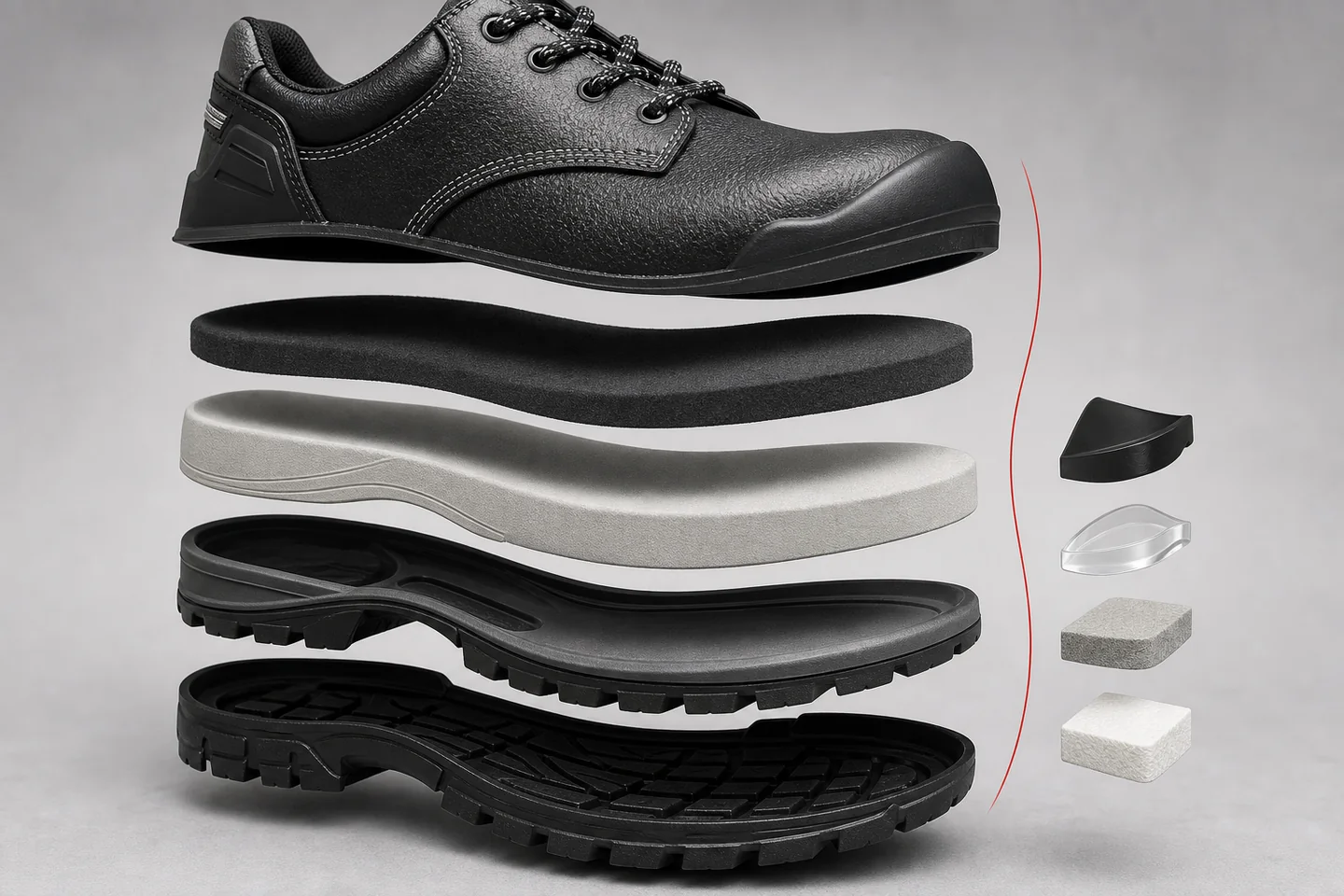
Sole materials & technology
Understand single- and dual-density soles plus PU, NBR, TPU, PVC and EVA material trade-offs for safety footwear.
Read detailed guide →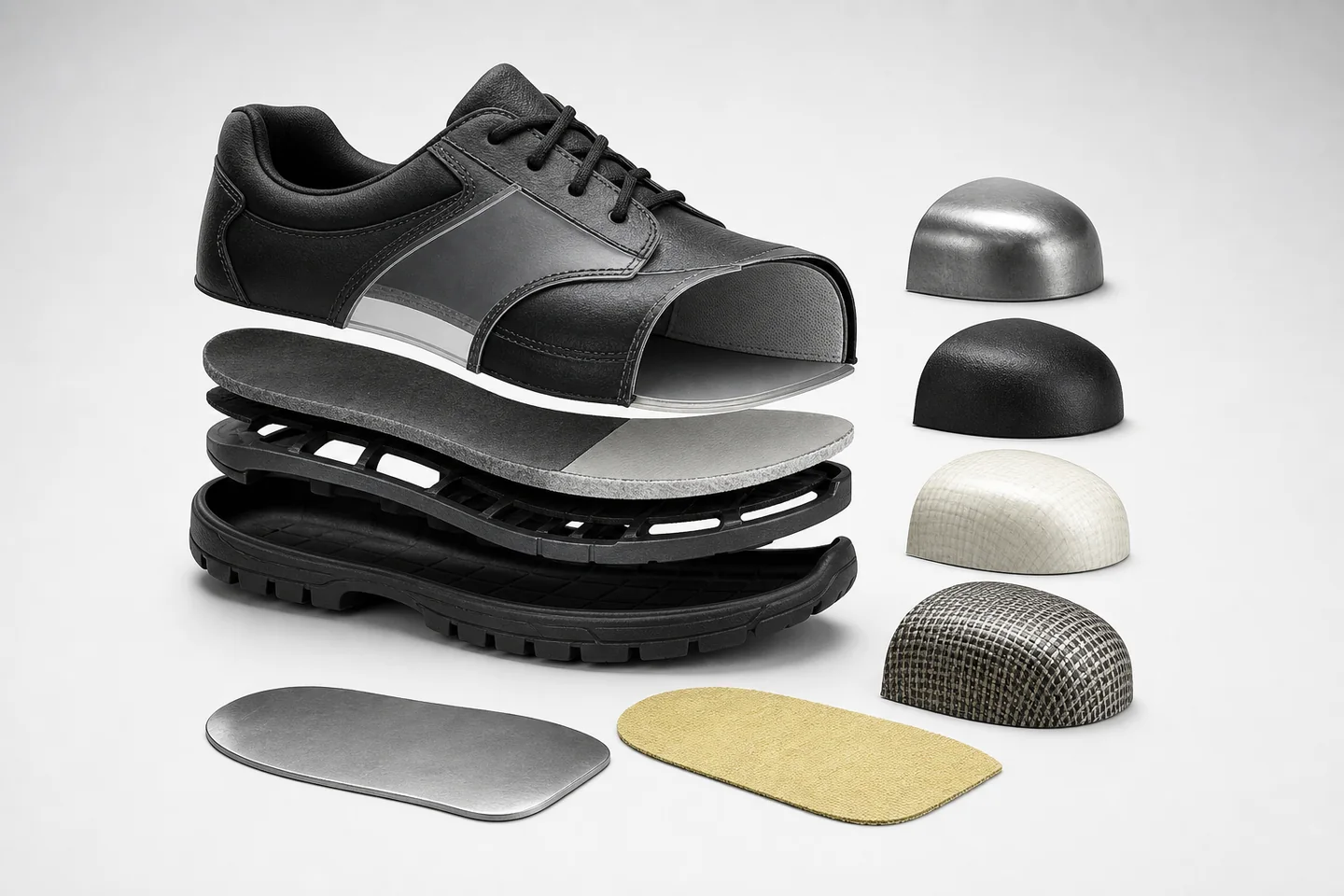
Toe caps & midsoles
How steel, composite and fibreglass toe caps compare—and when to choose steel or textile anti-penetration inserts.
Read detailed guide →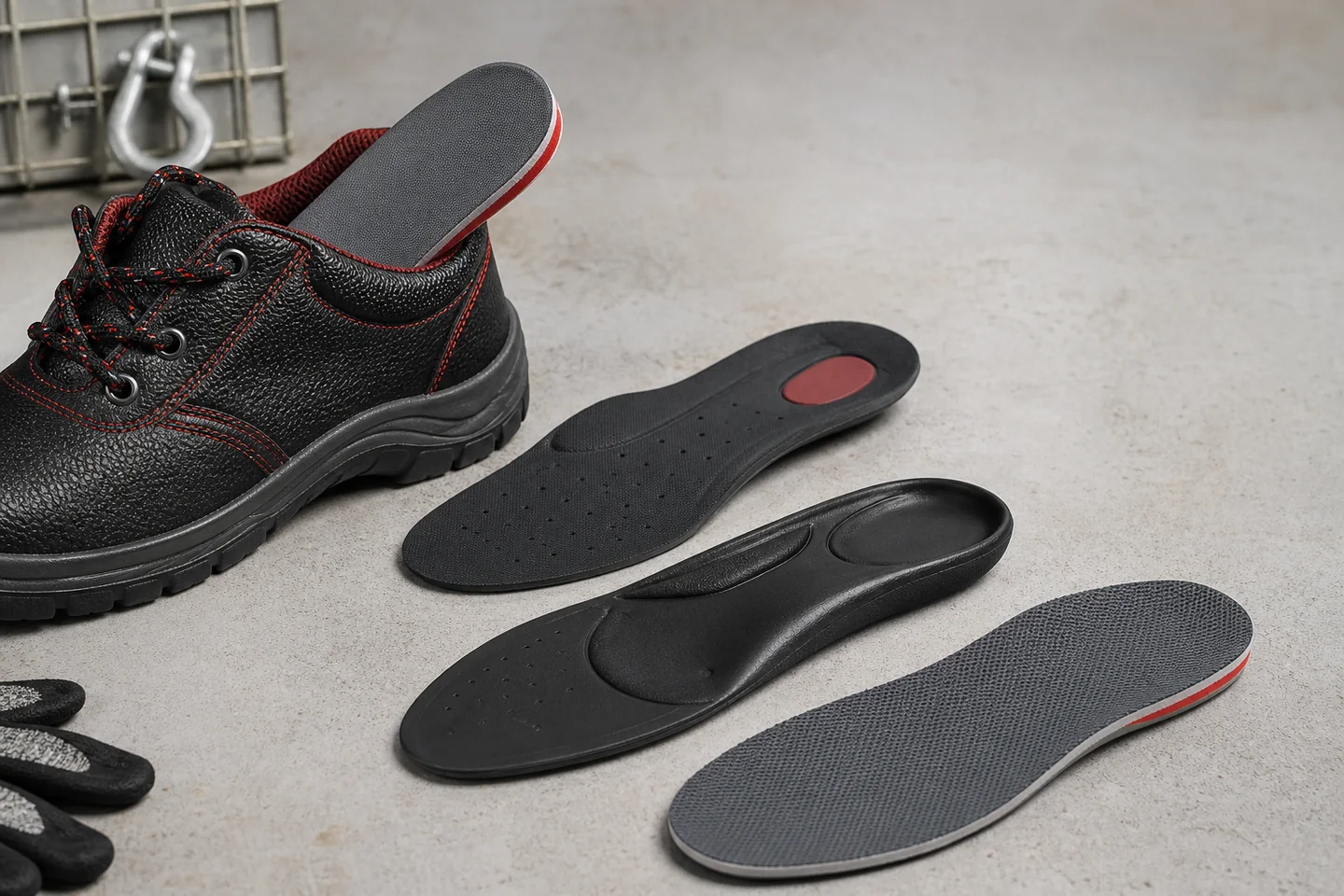
Insocks & comfort
The removable insock—commonly called the insole—affects fit, cushioning, moisture management and the integrity of certified footwear.
Read detailed guide →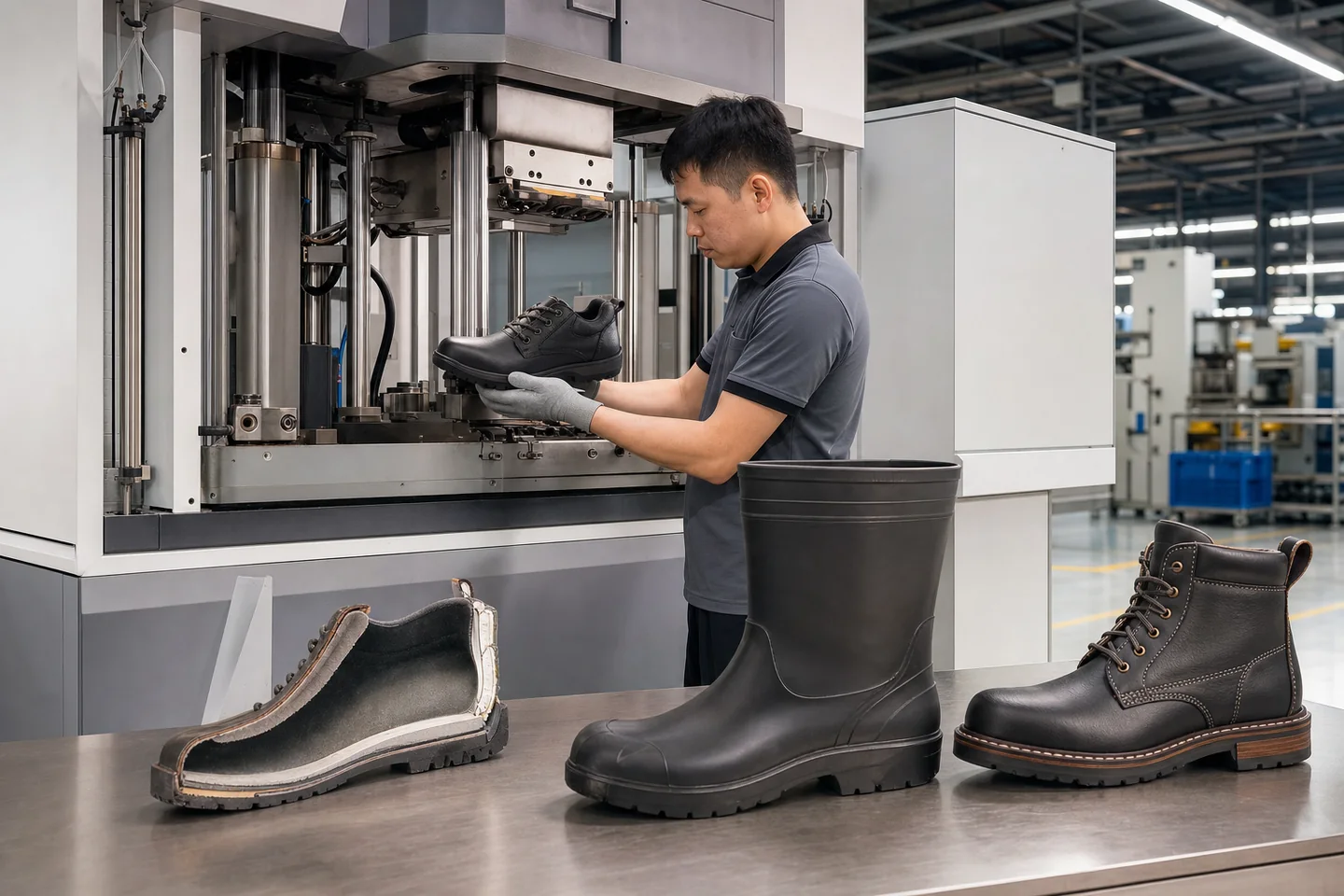
Construction methods
Construction method determines how the upper and sole come together, influencing design freedom, bonding, weight, tooling and production scale.
Read detailed guide →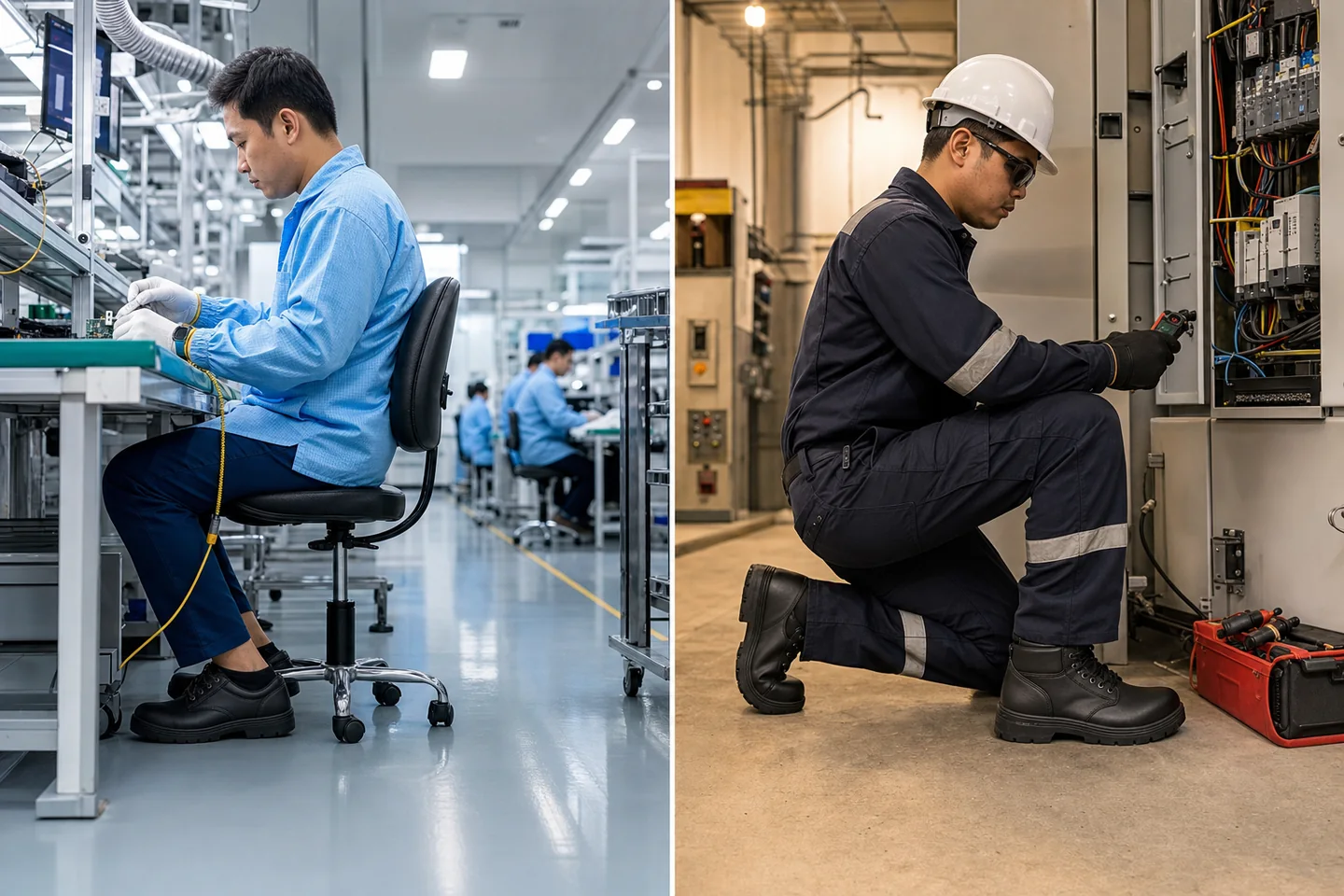
ESD vs ESR / EH
ESD shoes and electrical shock resistant (ESR/EH) shoes manage electricity in opposite ways and must never be treated as interchangeable.
Read detailed guide →Standards framework
Read the code before you specify.
A model name alone does not prove suitability. Confirm the current standard, protection class, optional markings and certificate scope.
Selection rule
Hazard assessment first. Technology second. Certificate always.
Material and construction guides help procurement teams ask better questions, but they do not replace site-specific risk assessment or model-level documentation. Ask RHINO SHOE for the current data sheet and certificate for the exact product, market and configuration under consideration.