
ESD protects sensitive products and processes from electrostatic discharge
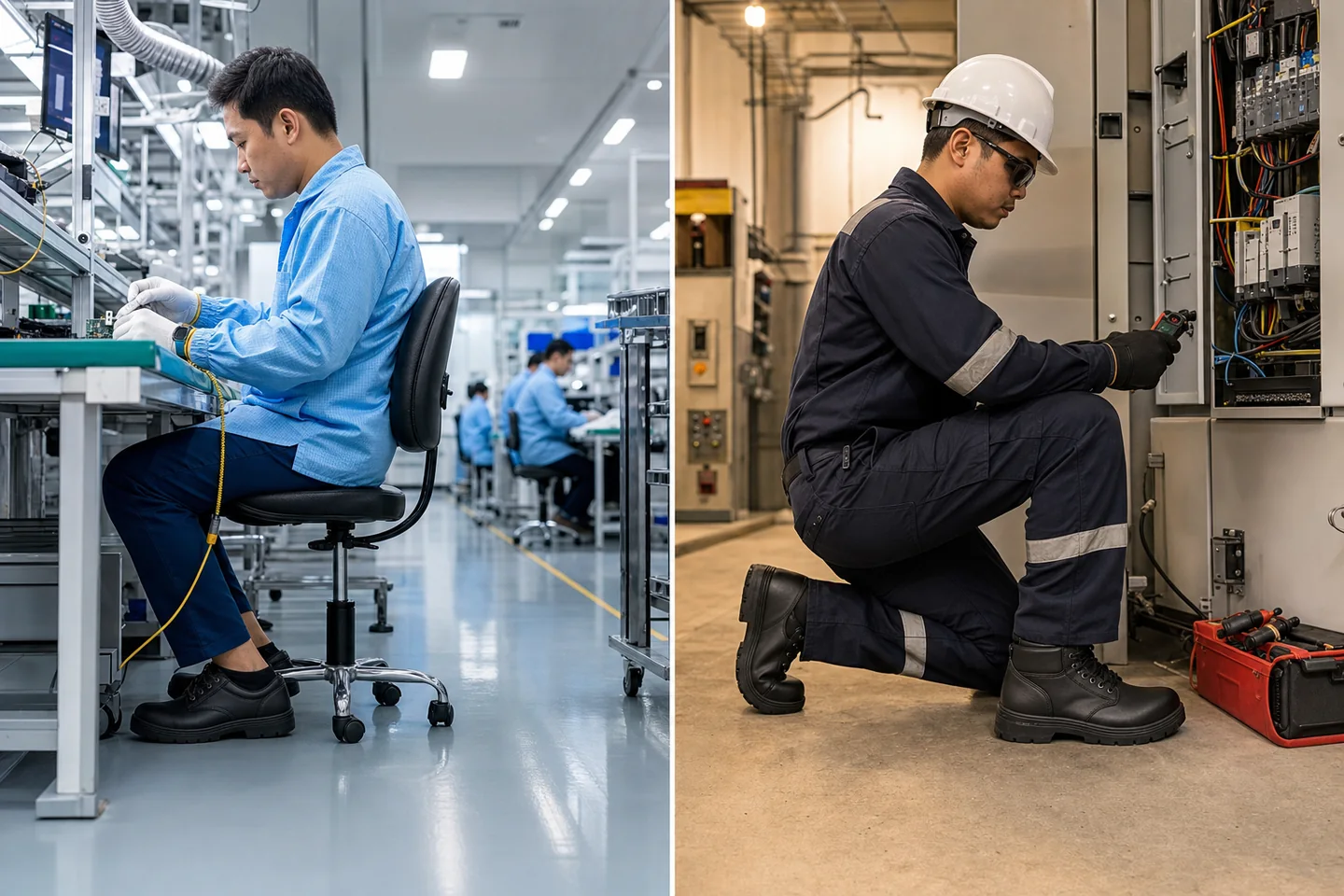
Electrical protection explained
ESD vs Electrical Shock Resistant Safety Shoes
ESD shoes and electrical shock resistant (ESR/EH) shoes manage electricity in opposite ways and must never be treated as interchangeable.
Why it matters
Make the material serve the risk.
ESD footwear helps controlled static charge flow from the wearer through a compatible floor and grounding system. Electrical shock resistant or electrical hazard footwear is designed to impede hazardous current through the wearer under defined dry test conditions.
Because one application manages dissipation and the other prioritises insulation, the wrong choice can undermine the site control strategy. Footwear is supplementary PPE and never replaces isolation, lockout, insulating gloves, mats or other primary electrical controls.
ESR/EH footwear helps protect the wearer from electric shock under specified conditions
Antistatic is a broader safety-footwear property and is not automatically ESD
Wet, worn or contaminated footwear may behave differently
A site electrical or ESD specialist should approve the system
Compare the options
Do not interchange these categories
The site hazard assessment, floor system and applicable standard determine the right category.
OptionBest suited toConsiderationsRHINO SHOE perspective
ESD footwear
Electronics, semiconductor, assembly and electrostatic-protected areas
Must work with compatible flooring, garments and verification tests; it is not electrical insulation.
Selected Primeguard/Flexiguard configurations support ESD-controlled workplaces; verify the exact resistance marking.
Antistatic footwear
Reducing static accumulation while providing limited current flow
The resistance range is broader than dedicated ESD control and differs by standard edition.
Many RHINO industrial models include antistatic properties as part of their certified class.
ESR / EH footwear
Supplementary protection where electric-shock hazards remain after primary controls
Protection is conditional, commonly tested dry, and can be compromised by moisture, wear or contamination.
Voltguard is designed for electrical-hazard focused applications; request the current model test documentation.
Conductive footwear
Special explosive-risk controls where rapid charge dissipation is required
Must not be used where the wearer is exposed to live electrical hazards.
This is a specialist system requirement, not a default substitute for ESD footwear.
Selection checklist
Questions to resolve before procurement.
- Identify whether the risk is product-damaging static or electric shock to the wearer
- Have a competent person approve the footwear-floor-control system
- Verify resistance at the intervals required by the site programme
- Remove damaged, wet or contaminated footwear from electrical service until assessed
Continue learning
Related footwear knowledge.

Standards & certification
A practical guide to the standards, approval pathways and model-specific documents used when buying certified safety shoes and boots.
Read guide →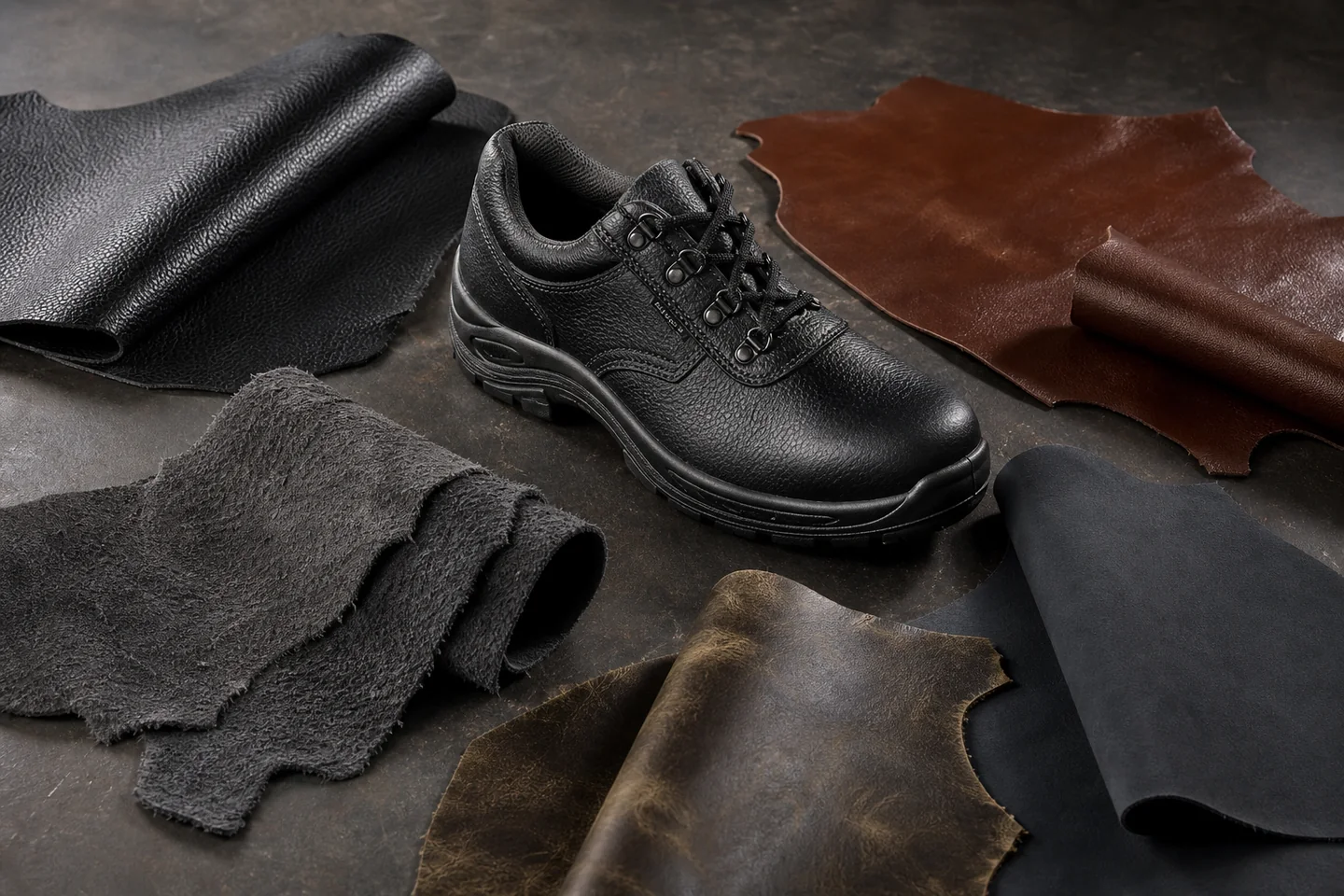
Upper materials
Compare leather and synthetic safety shoe uppers by durability, climate, maintenance, appearance and industrial application.
Read guide →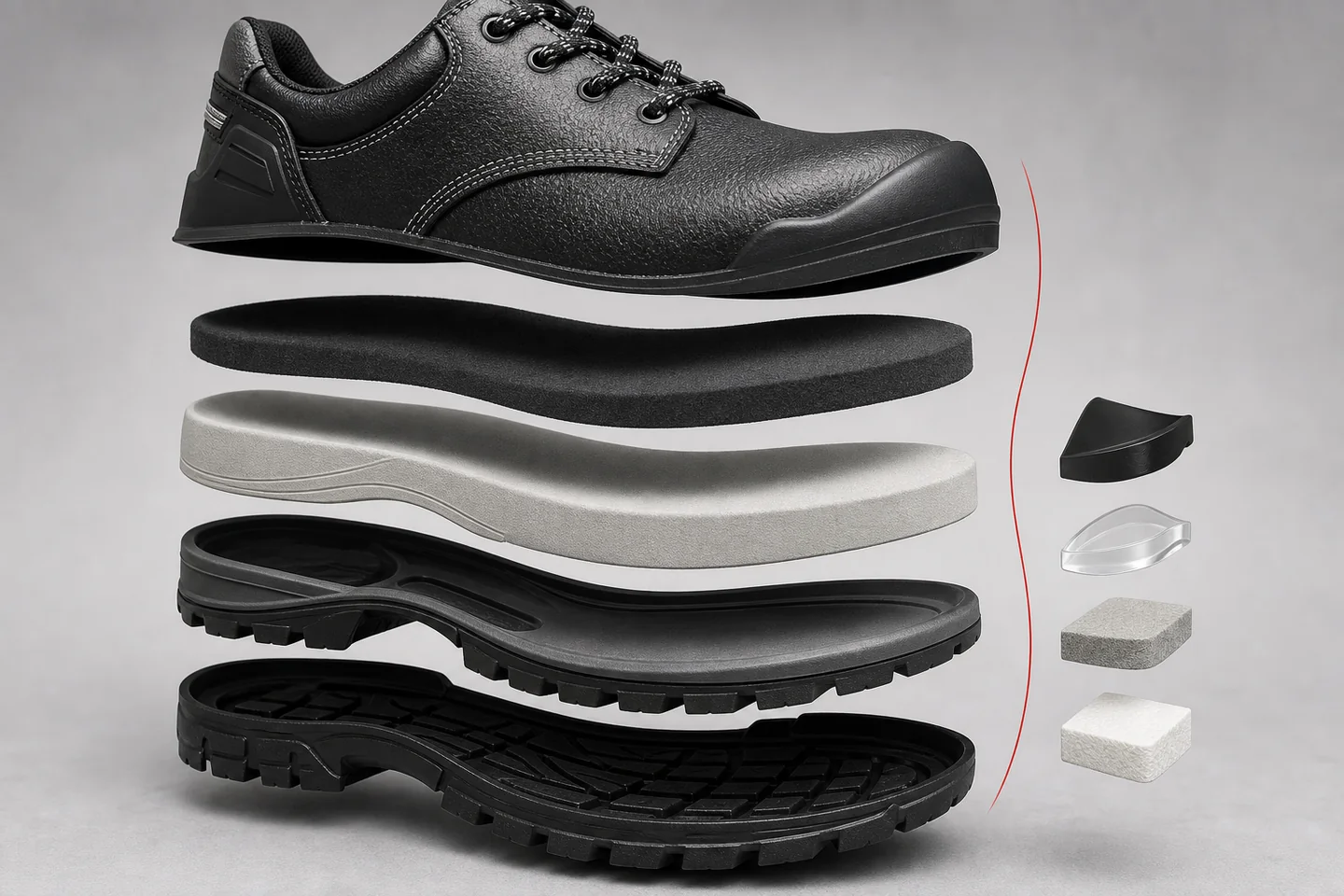
Sole materials & technology
Understand single- and dual-density soles plus PU, NBR, TPU, PVC and EVA material trade-offs for safety footwear.
Read guide →Important: This guide provides general product-selection information. It does not replace a competent risk assessment, the current applicable standard, or the certificate and technical data sheet for the exact footwear model.