
PU can balance cushioning, weight and production efficiency
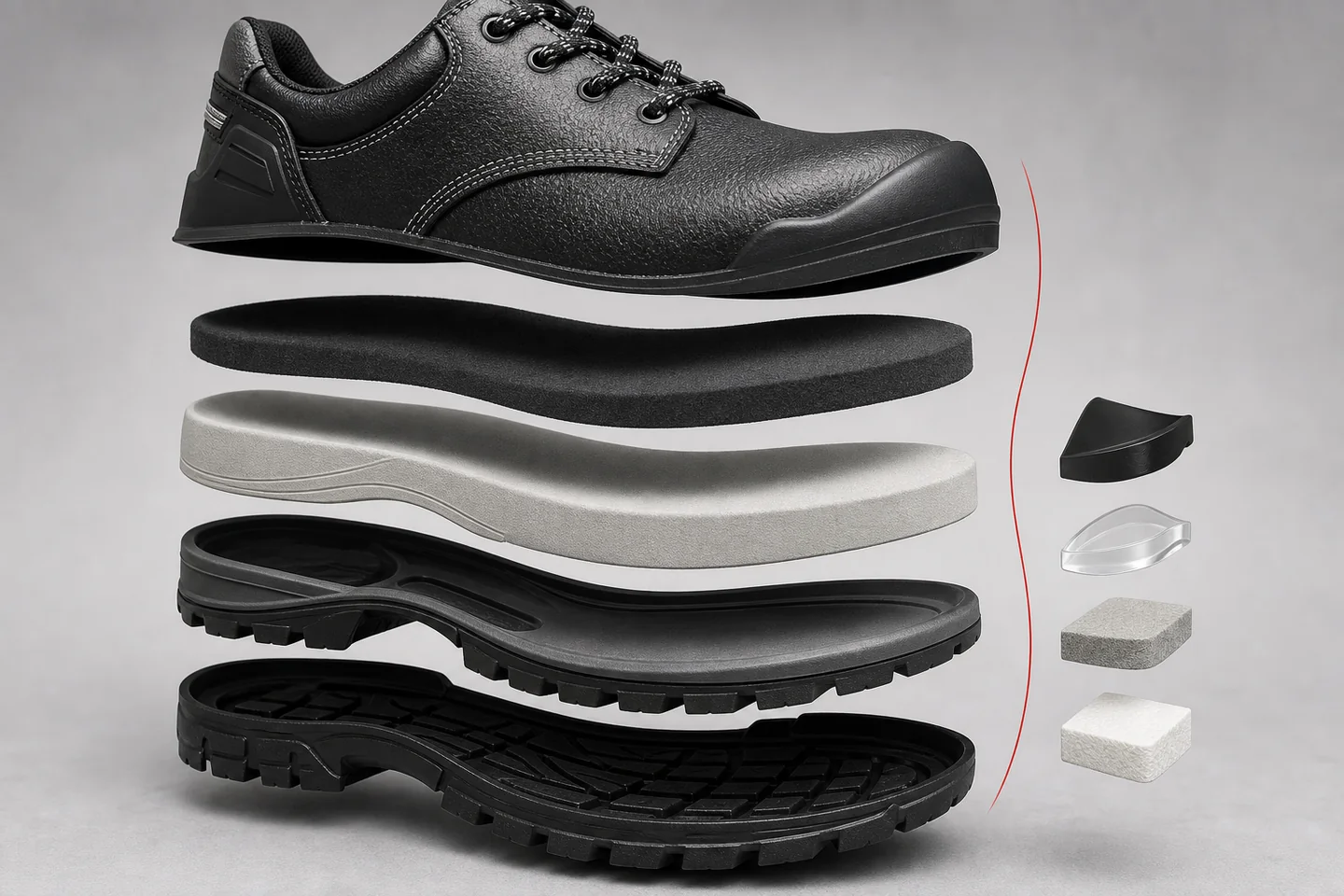
Outsole engineering
Safety Shoe Sole Materials & Density Systems
Understand single- and dual-density soles plus PU, NBR, TPU, PVC and EVA material trade-offs for safety footwear.
Why it matters
Make the material serve the risk.
The sole system controls grip, cushioning, abrasion, flex, heat response, chemical compatibility and much of the shoe's weight. Tread design and compound formulation matter alongside the material family.
Single density uses one main injected or moulded density. Dual density combines a softer comfort layer with a denser wearing layer, or combines different materials to obtain complementary properties.
Nitrile rubber is valued for heat, oil and industrial durability
TPU offers abrasion performance and a crisp, durable finish
PVC enables waterproof injected boots
EVA is light and cushioning but normally needs an appropriate wearing surface for demanding safety use
Compare the options
Sole material and combination guide
Actual resistance to slips, heat, oil or chemicals must come from the certified compound and completed footwear test—not the material name alone.
OptionBest suited toConsiderationsRHINO SHOE perspective
Single-density PU
Everyday indoor industrial safety shoes
Light and cushioning; compound quality and hydrolysis resistance are important in humid storage.
Safeguard offers practical PU-based protection for general factories and warehouses.
Dual-density PU/PU
Long shifts needing softer cushioning and a tougher outsole skin
Two densities tune comfort and wear; process control is critical for bonding.
Used in selected Primeguard and Flexiguard concepts for comfort-led industrial mobility.
Nitrile rubber (NBR)
Heat, oil and harsh industrial floors
Often heavier and firmer than PU; verify HRO and chemical claims on the exact model.
Ultranite's direct-vulcanised NBR system is engineered for demanding metal, oil and heavy-industry work.
PU / nitrile rubber
Cushioning from PU with a robust rubber contact layer
Multi-material bonding, weight and flex must be engineered together.
A strong OEM option when the target specification needs rubber performance with a softer mid-layer.
EVA / nitrile rubber
Light cushioning plus a durable rubber contact outsole
Compression set, bond strength and heat exposure must be validated.
Considered for suitable OEM briefs where low weight and outsole durability are priorities.
TPU / PVC
Abrasion-focused components or waterproof injected boots
TPU can be firm; PVC is typically used as a whole waterproof boot system rather than a breathable safety shoe.
RHINO's PVC boot lines provide easy-clean waterproof protection for wet work and agriculture.
Selection checklist
Questions to resolve before procurement.
- Map floor contaminants, temperature and slip conditions
- Decide whether cushioning, heat or chemical resistance is the priority
- Review the complete footwear test report and outsole marking
- Include tropical storage and hydrolysis performance in regional procurement
Continue learning
Related footwear knowledge.
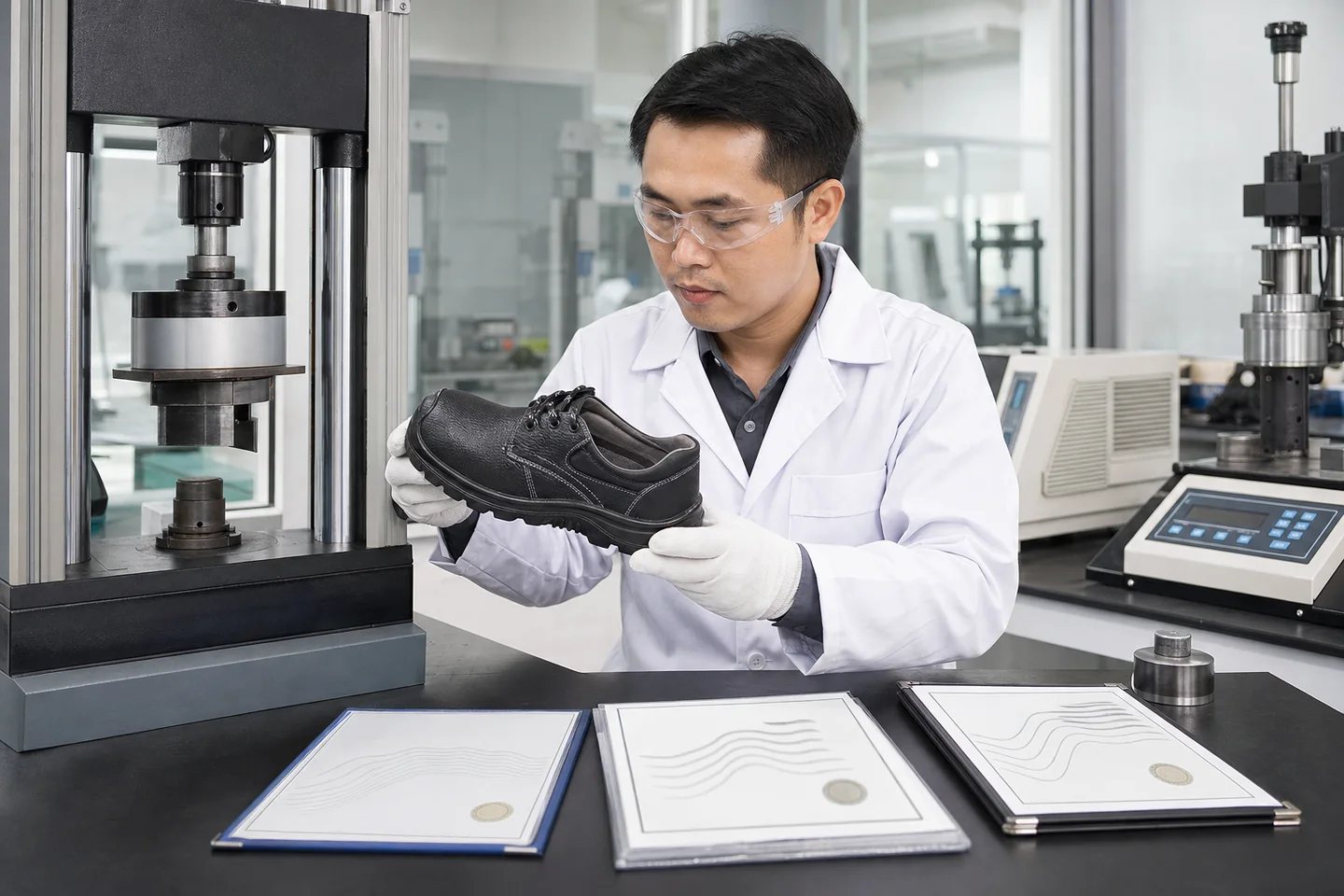
Standards & certification
A practical guide to the standards, approval pathways and model-specific documents used when buying certified safety shoes and boots.
Read guide →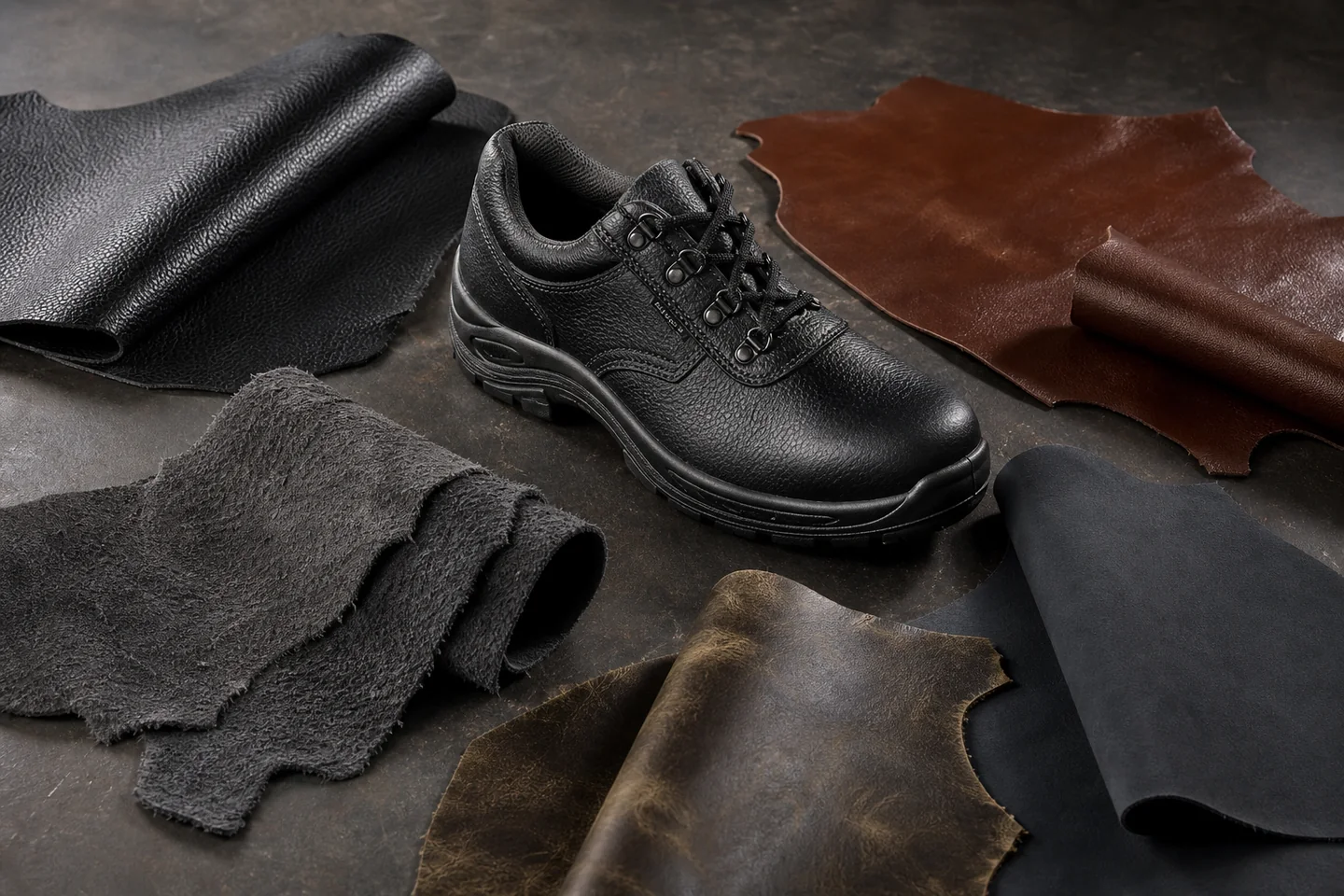
Upper materials
Compare leather and synthetic safety shoe uppers by durability, climate, maintenance, appearance and industrial application.
Read guide →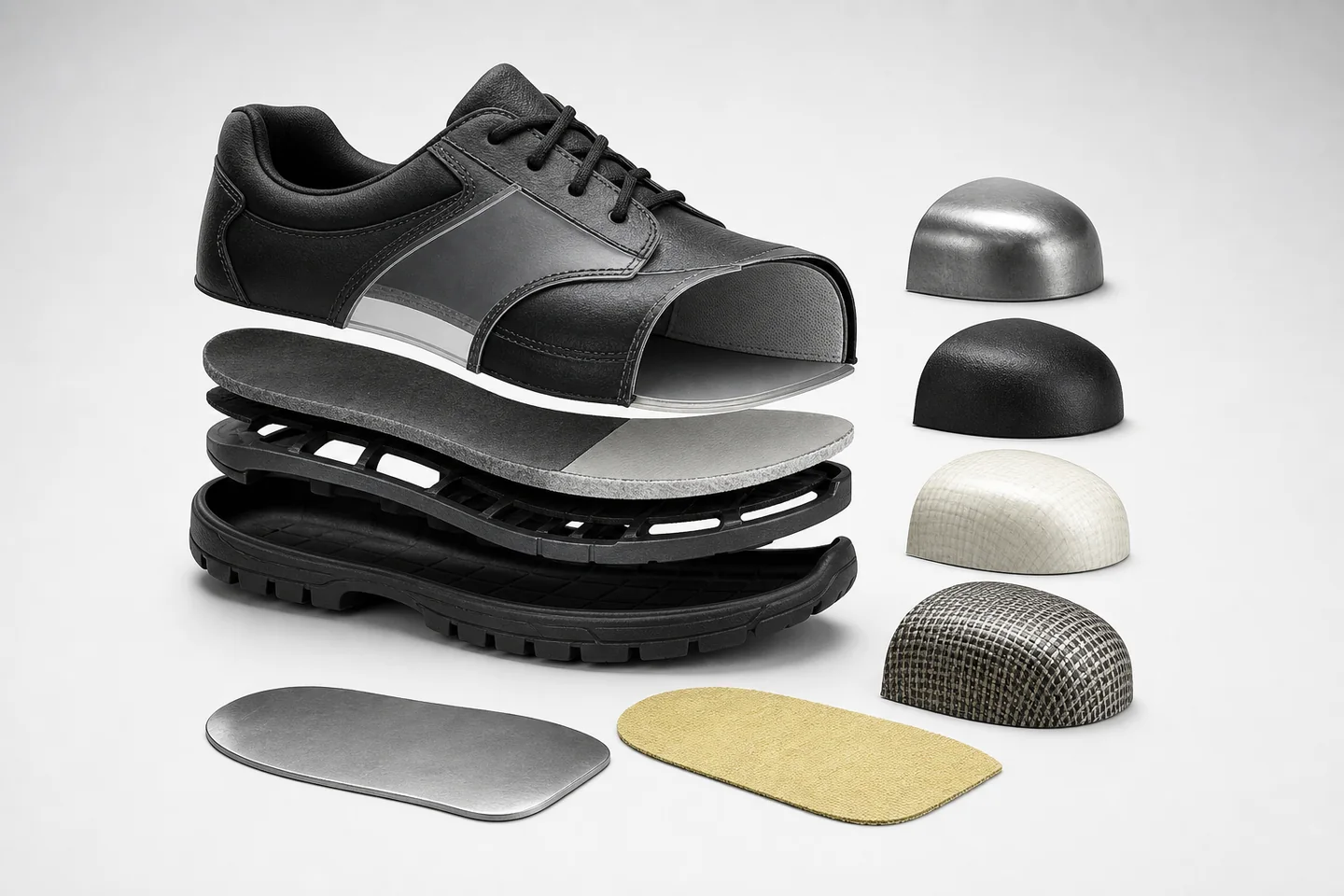
Toe caps & midsoles
How steel, composite and fibreglass toe caps compare—and when to choose steel or textile anti-penetration inserts.
Read guide →Important: This guide provides general product-selection information. It does not replace a competent risk assessment, the current applicable standard, or the certificate and technical data sheet for the exact footwear model.