
Steel remains compact, proven and cost-effective
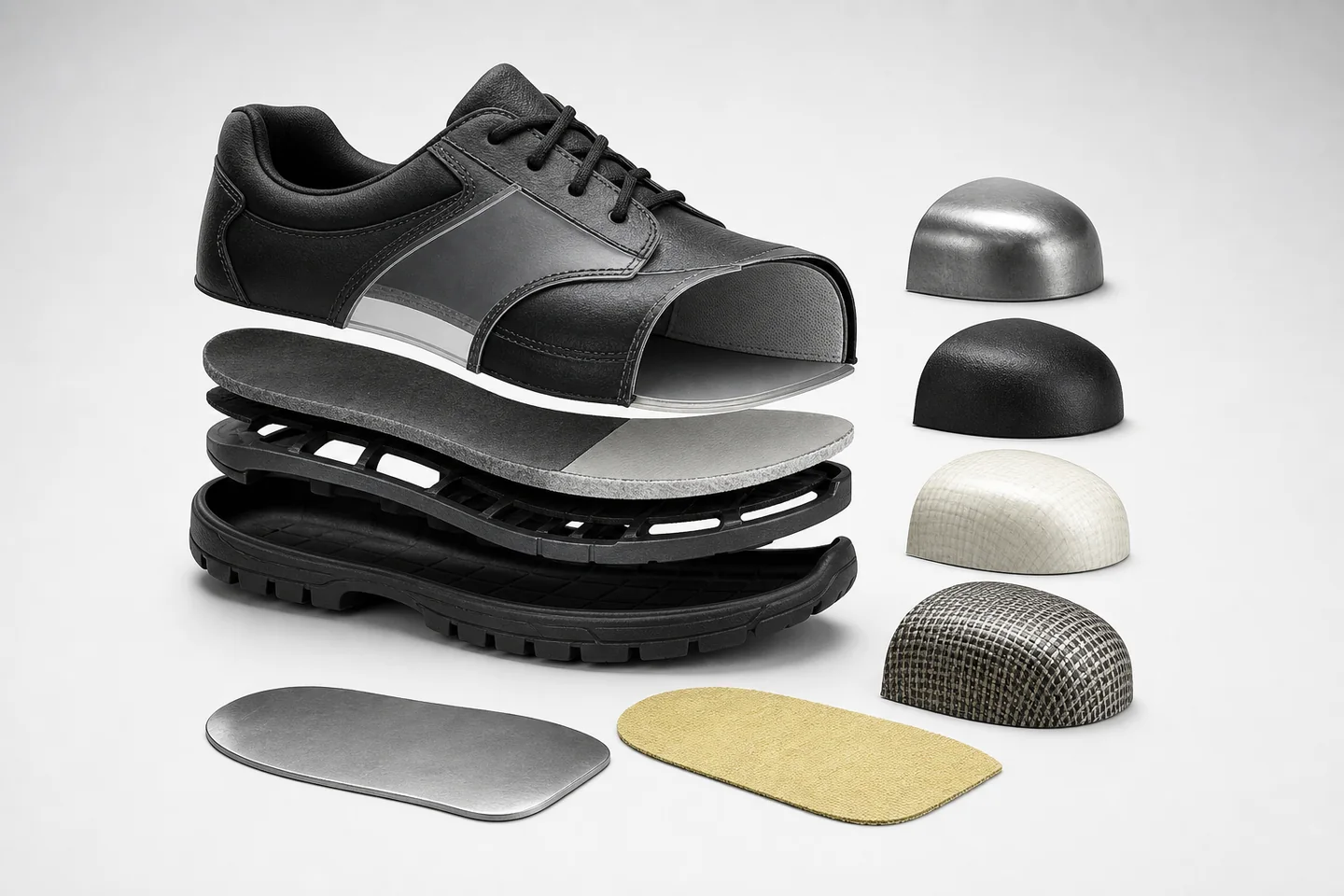
Impact & penetration protection
Toe Caps & Anti-Penetration Midsoles
How steel, composite and fibreglass toe caps compare—and when to choose steel or textile anti-penetration inserts.
Why it matters
Make the material serve the risk.
The toe cap protects against specified impact and compression hazards. The anti-penetration insert addresses sharp objects entering through the sole. These components solve different risks and must be certified as part of the complete shoe.
Material choice affects weight, toe profile, metal detection, thermal feel, flexibility and cost. A metal-free claim normally requires both a non-metal toe cap and textile anti-penetration insert, plus non-metal fittings.
Fibreglass and composite caps support metal-free designs
Advanced fibre or nanofibre concepts can reduce weight but still require completed-footwear testing
Steel plates and textile inserts have different coverage and flex characteristics
Compare the options
Protective component comparison
A generic material label does not prove performance. Confirm the cap, insert and completed shoe were tested together.
OptionBest suited toConsiderationsRHINO SHOE perspective
Steel toe cap
General and heavy industry where proven compact protection is valued
Metal content, thermal feel and weight may matter in some jobs.
Available across dependable RHINO industrial and PVC safety boot configurations.
PC/composite toe cap
Metal-free footwear, security-sensitive sites and reduced thermal conductivity
May require more internal volume; formulation and ageing performance vary.
An OEM and selected-model option when a certified metal-free design is required.
Fibreglass toe cap
Metal-free safety shoes balancing rigidity and weight
Cap geometry and last design determine comfort as much as material.
Ultranite and Primeguard use wide-fitting fibreglass caps in selected models.
Advanced fibre / nanofibre cap
Weight-focused premium development
Supplier validation, repeatability and model-level certification are essential.
Evaluated for suitable future or OEM briefs rather than treated as an automatic upgrade.
Steel midsole plate
Traditional puncture protection and sharp industrial debris
Firm, metallic and less flexible; test method and nail geometry matter.
A proven option in selected Safeguard, clearance and PVC safety boot models.
Textile anti-penetration insert
Metal-free, flexible and lighter footwear
Coverage, stitch protection and current standard marking must be checked.
Aramid anti-penetration fabric supports lightweight Ultranite and Primeguard configurations.
Selection checklist
Questions to resolve before procurement.
- Separate toe-impact risk from underfoot penetration risk
- Check metal-free or metal-detection requirements
- Prioritise internal toe volume and correct size fitting
- Confirm the current penetration marking and test method on the certificate
Continue learning
Related footwear knowledge.
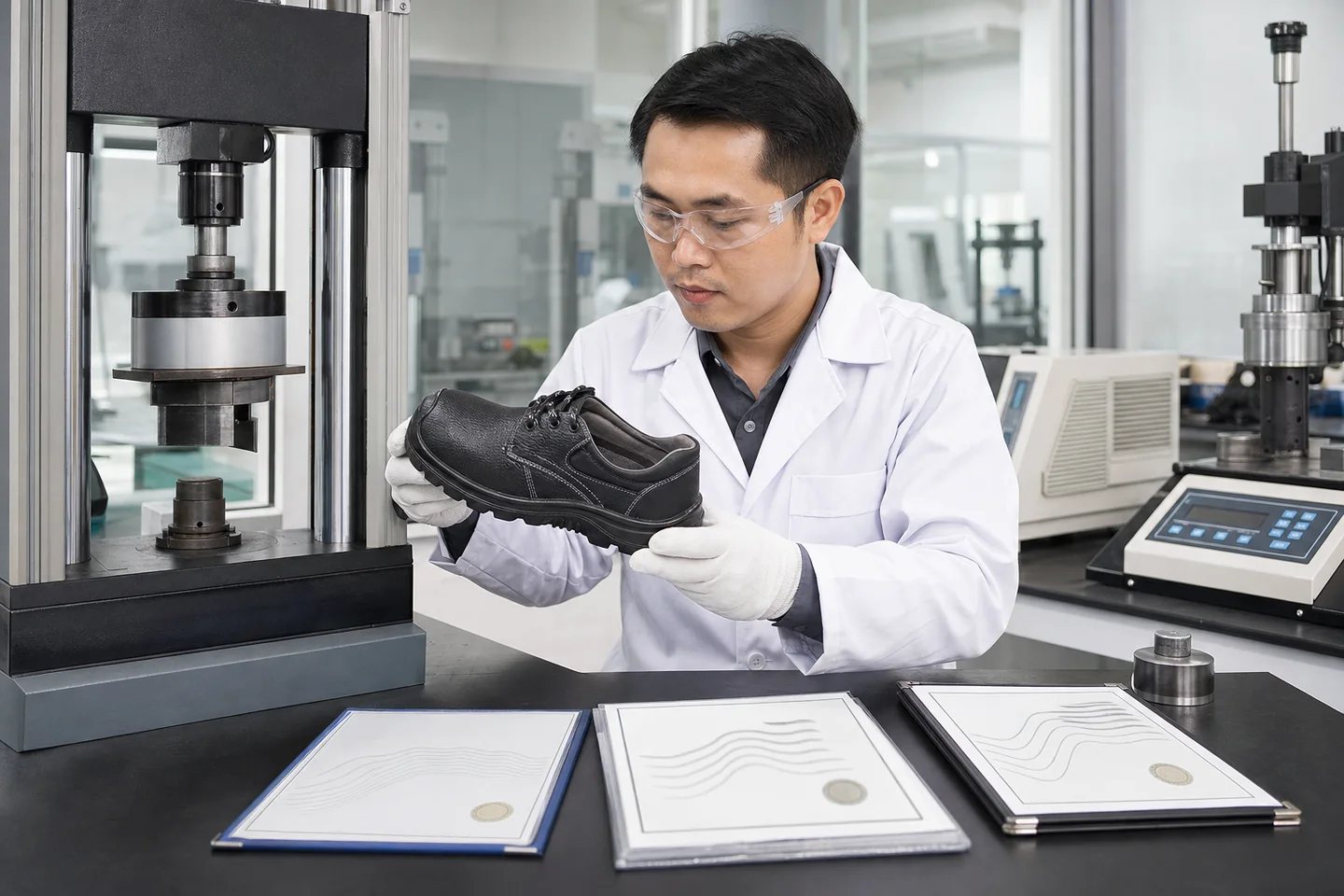
Standards & certification
A practical guide to the standards, approval pathways and model-specific documents used when buying certified safety shoes and boots.
Read guide →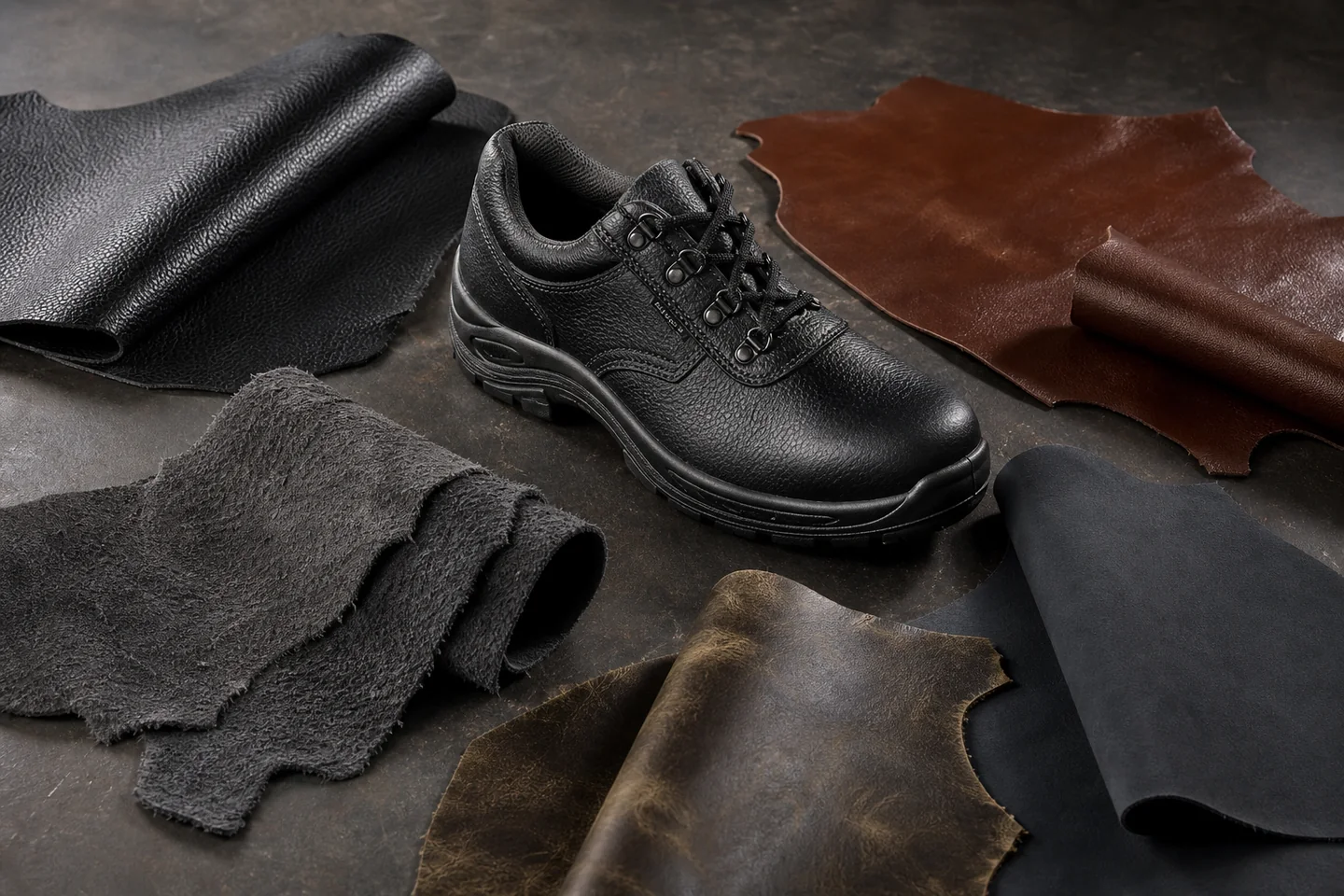
Upper materials
Compare leather and synthetic safety shoe uppers by durability, climate, maintenance, appearance and industrial application.
Read guide →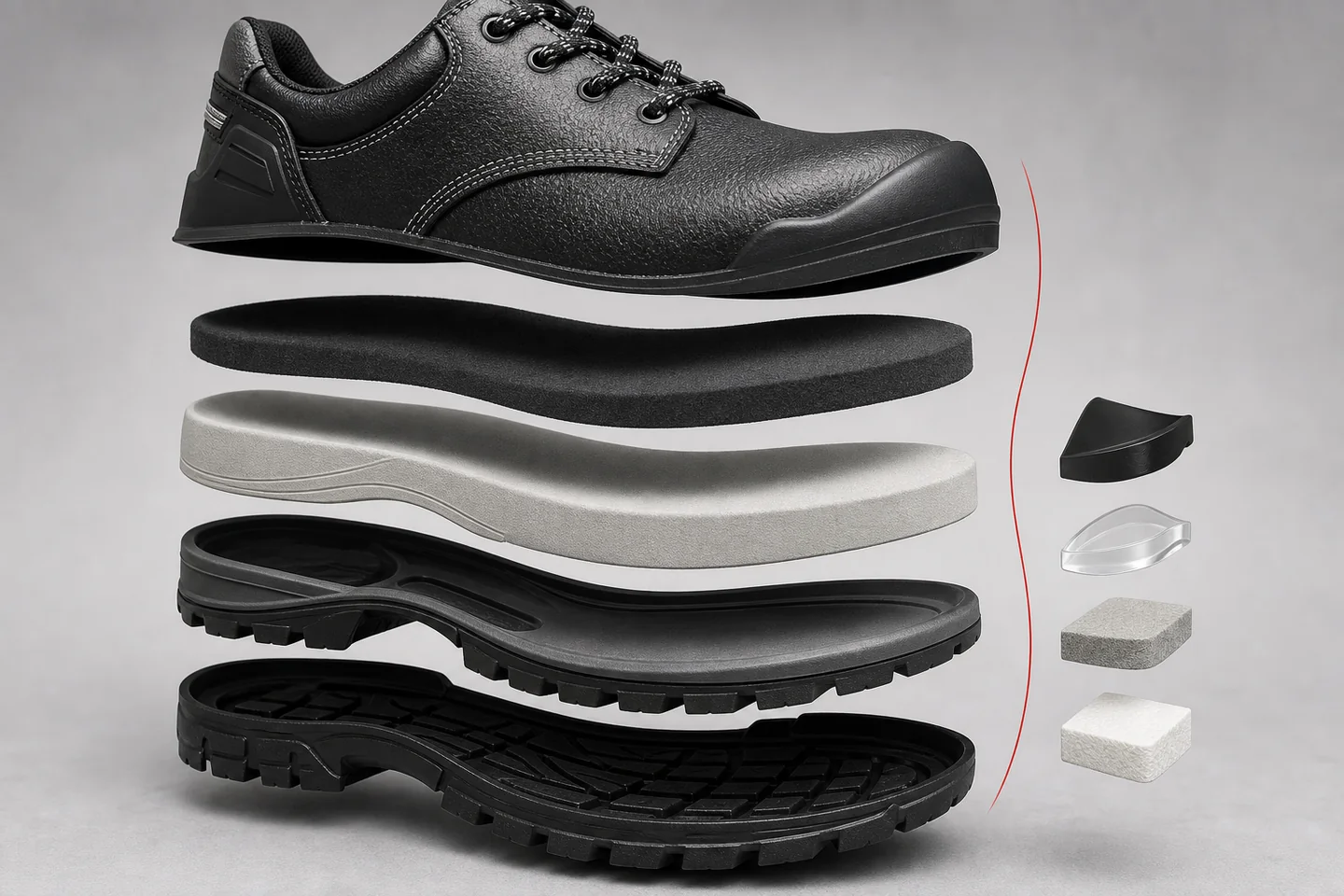
Sole materials & technology
Understand single- and dual-density soles plus PU, NBR, TPU, PVC and EVA material trade-offs for safety footwear.
Read guide →Important: This guide provides general product-selection information. It does not replace a competent risk assessment, the current applicable standard, or the certificate and technical data sheet for the exact footwear model.