
Full-grain refers to the intact outer grain surface
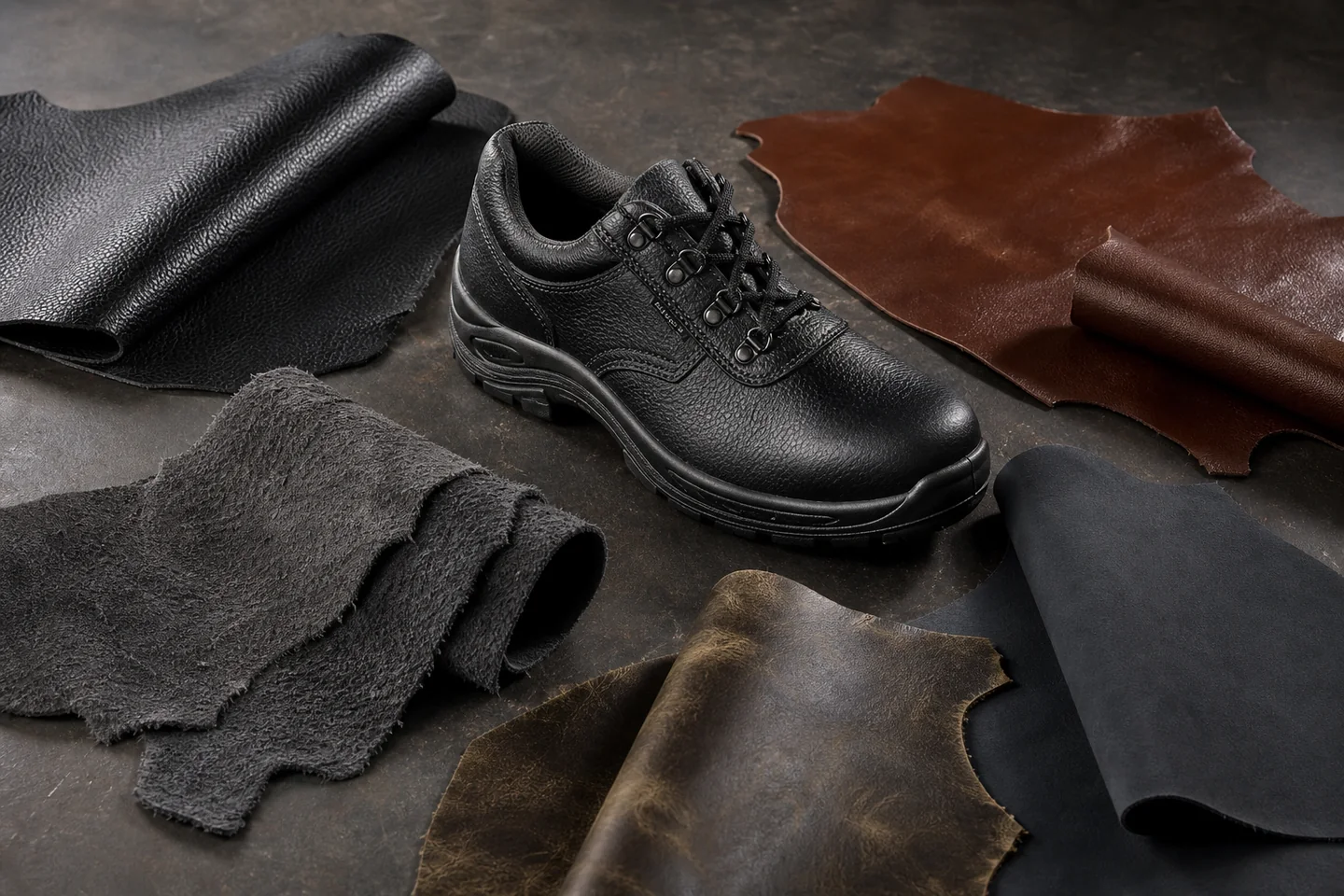
Material guide
Safety Shoe Upper Materials
Compare leather and synthetic safety shoe uppers by durability, climate, maintenance, appearance and industrial application.
Why it matters
Make the material serve the risk.
The upper holds the foot, supports fit and protects the internal safety components. Its finish influences flex, water behaviour, breathability, cleaning and the way a shoe ages.
RHINO SHOE selects upper materials around the product's intended workplace and price-performance position. No material is universally best; construction quality, thickness, treatment, lining and maintenance matter as much as the generic name.
Buffalo leather can provide a robust industrial character
Split and suede describe layers or surface finishes with different care needs
Microfiber can offer consistency, low weight and easy cleaning
Compare the options
Upper material comparison
Use this table as a selection guide, then confirm the specification of the exact RHINO SHOE model.
OptionBest suited toConsiderationsRHINO SHOE perspective
Full-grain cow leather
General industry, engineering and long-wear applications
Strong, supportive and repairable but requires appropriate conditioning and drying.
Used across selected Safeguard and professional leather models for dependable daily wear.
Full-grain buffalo leather
Heavy-duty safety footwear and robust uppers
Distinct grain and durable feel; natural variation is normal.
A signature material in selected Ultranite models, paired with high-performance nitrile rubber soles.
Split leather / suede
Breathable panels, flexible zones and cost-conscious designs
Open surface can collect dirt and may need specific water or stain treatment.
Applied where flexibility, texture and value support the intended work environment.
Crazy horse finish
Premium workwear styling with a pull-up patina
Waxed/oiled appearance changes with flex and wear; colour variation is part of the finish.
Primeguard uses premium buffalo crazy horse leather to combine industrial protection with contemporary workwear styling.
Microfiber
Easy-clean, consistent and potentially lighter synthetic uppers
Performance varies by grade; confirm abrasion, flex and hydrolysis requirements.
A useful option for selected projects and OEM designs where leather-free consistency is important.
Selection checklist
Questions to resolve before procurement.
- Define exposure to water, oils, heat, abrasion and repeated cleaning
- Consider tropical heat, shift length and lining breathability
- Specify leather thickness/grade or microfiber test requirements
- Use the manufacturer's approved care method to protect service life
Continue learning
Related footwear knowledge.
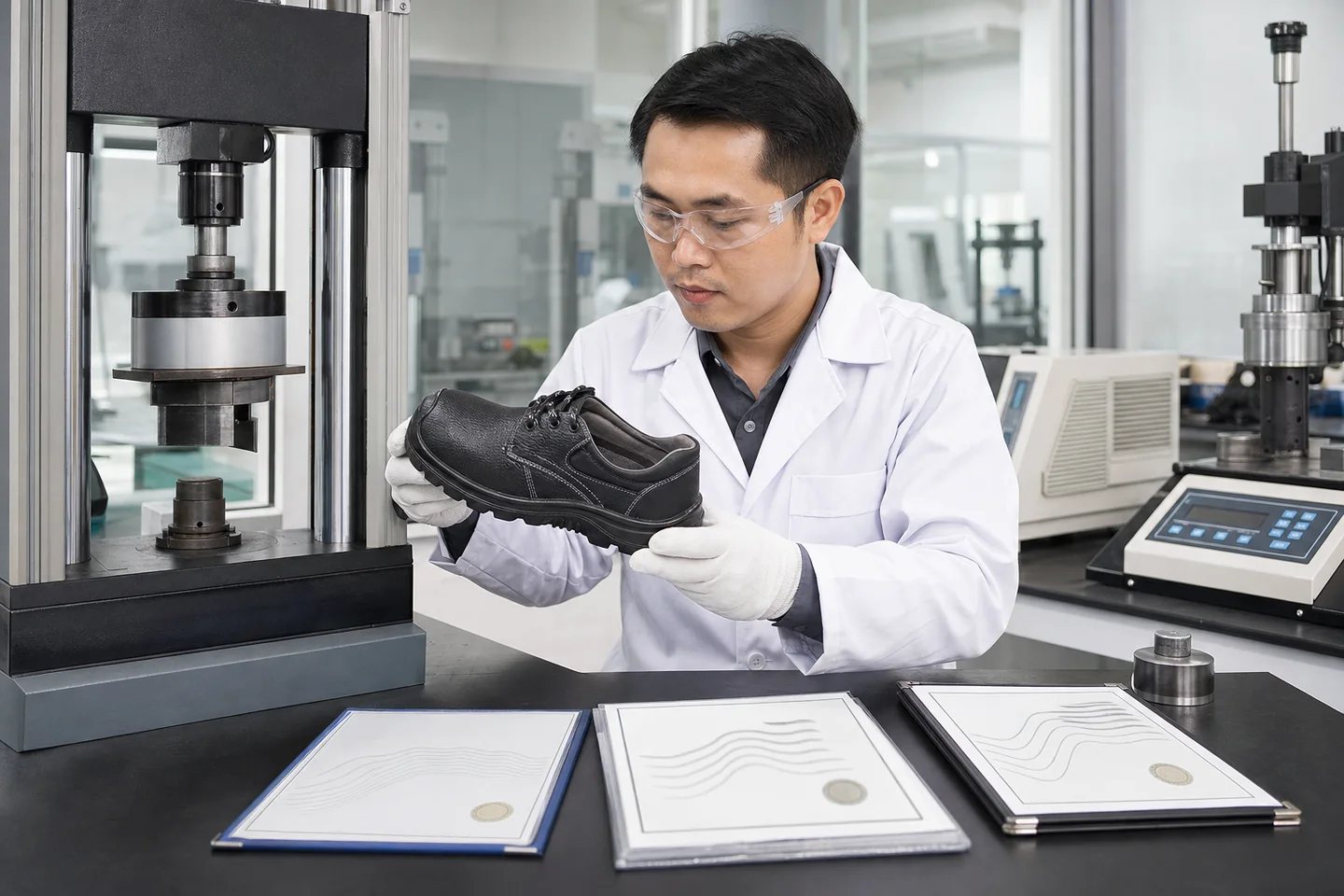
Standards & certification
A practical guide to the standards, approval pathways and model-specific documents used when buying certified safety shoes and boots.
Read guide →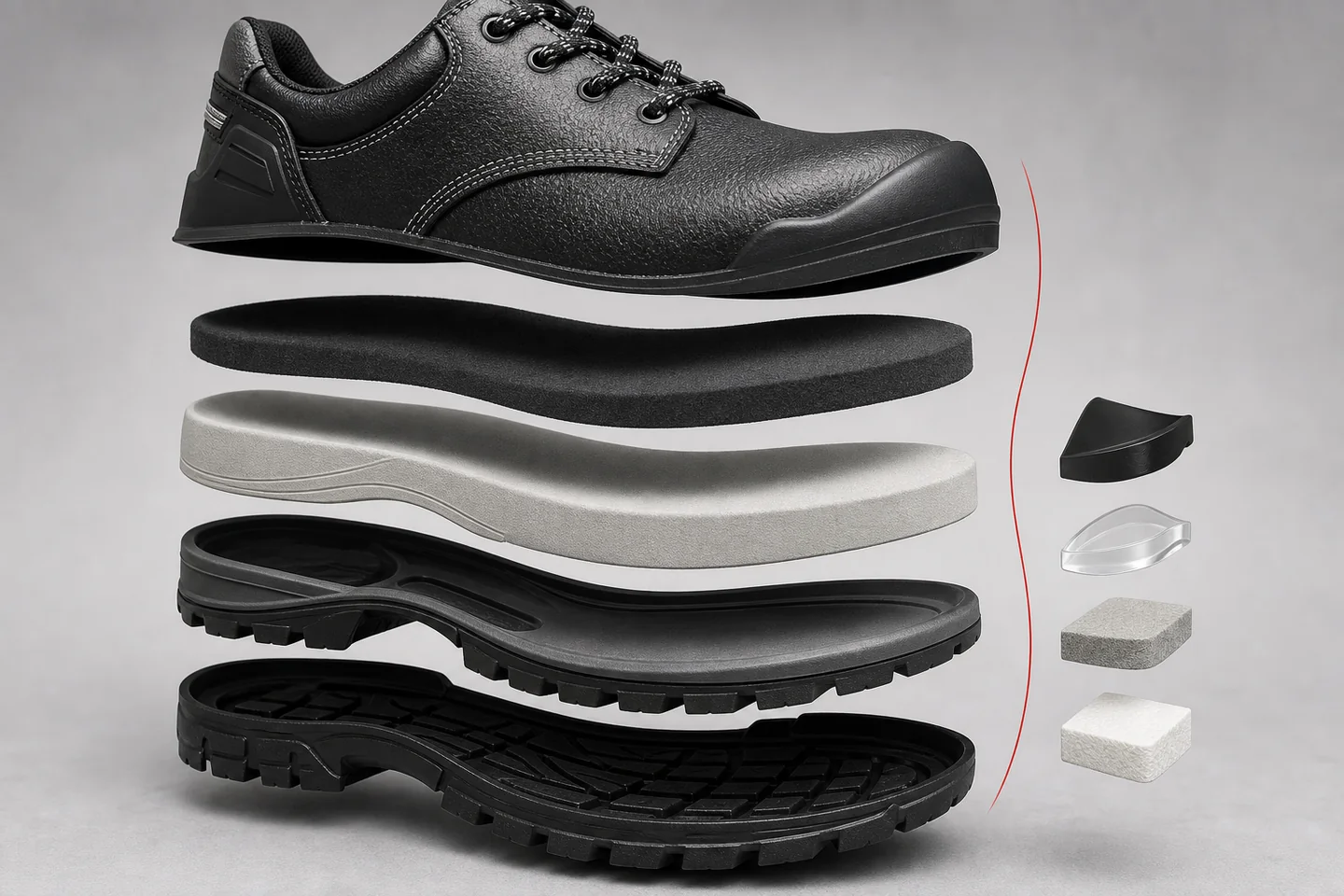
Sole materials & technology
Understand single- and dual-density soles plus PU, NBR, TPU, PVC and EVA material trade-offs for safety footwear.
Read guide →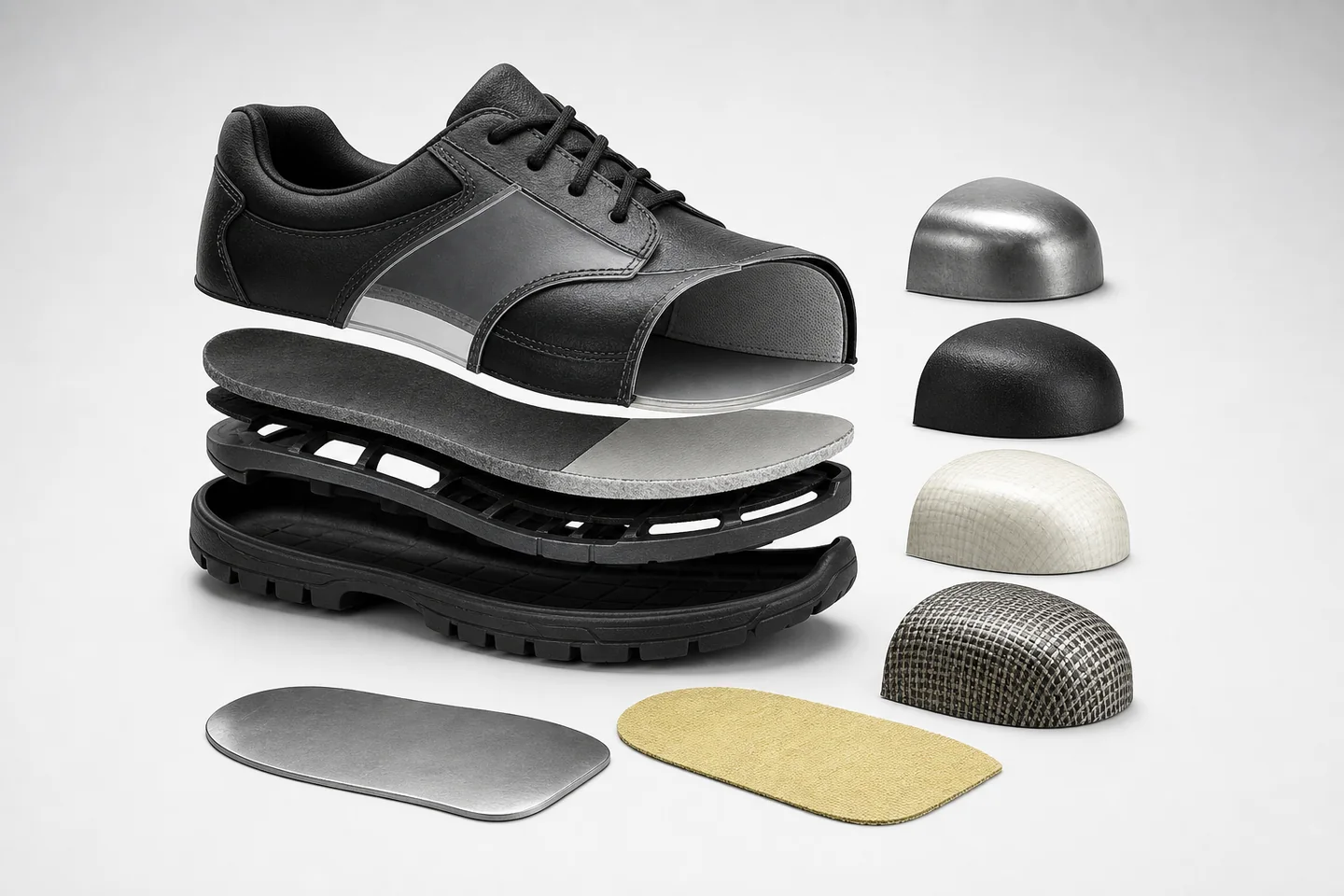
Toe caps & midsoles
How steel, composite and fibreglass toe caps compare—and when to choose steel or textile anti-penetration inserts.
Read guide →Important: This guide provides general product-selection information. It does not replace a competent risk assessment, the current applicable standard, or the certificate and technical data sheet for the exact footwear model.