
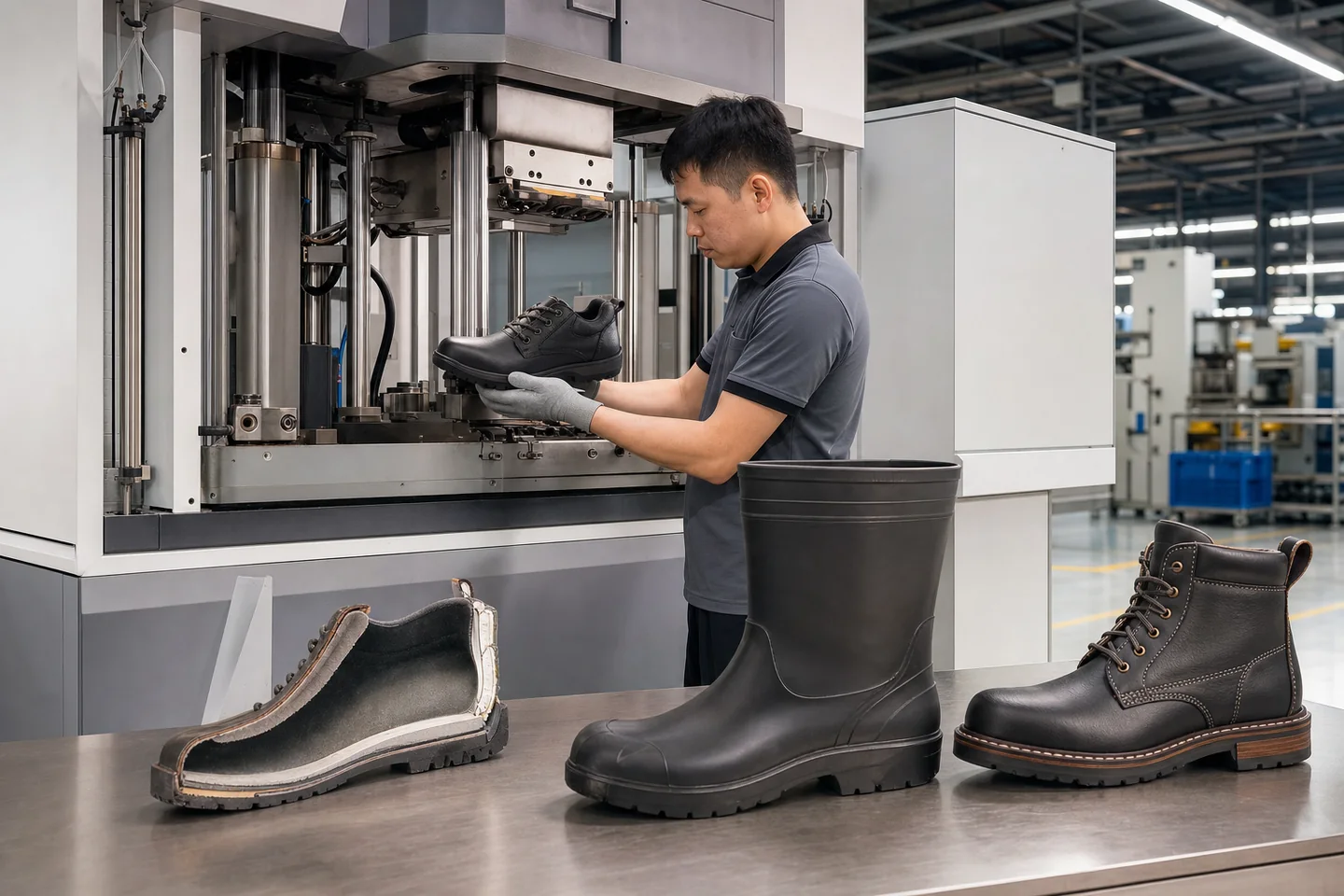
Cemented construction offers broad upper and outsole styling freedom
How footwear is built
Safety Footwear Construction Methods
Construction method determines how the upper and sole come together, influencing design freedom, bonding, weight, tooling and production scale.
Why it matters
Make the material serve the risk.
Two shoes with similar materials can behave differently because they are assembled by different methods. Construction influences bond durability, water entry points, repair options, styling and commercial feasibility.
Safetyware Sdn. Bhd. operates cemented, PU direct-injection, direct-vulcanisation and PVC injection capabilities in Malaysia, enabling RHINO SHOE and OEM programmes to select the process around the performance brief.
Direct injection forms and bonds the sole around the prepared upper
Direct vulcanisation creates a robust nitrile-rubber bond
PVC injection forms waterproof boot structures
Goodyear welt is durable and repairable but labour-intensive
Compare the options
Construction method comparison
No single method wins every category. The best process is the one that meets protection, durability, volume and value requirements.
OptionBest suited toConsiderationsRHINO SHOE perspective
Cemented
Flexible styling, mixed outsole choices and lower tooling complexity
Surface preparation, adhesive control and curing are critical to bond durability.
Supports a broad range of RHINO leather safety shoe designs and OEM styling.
PU direct injection
Efficient industrial production and strong upper-to-sole integration
Mould investment and process control suit planned volume; PU storage/ageing requirements matter.
Used for comfort-led single- and dual-density safety footwear platforms.
Direct Vulcanisation Technology
Nitrile rubber footwear for heat, oil and harsh floors
Specialised machinery, compound control and higher process expertise are required.
Ultranite is the flagship RHINO application of directly vulcanised NBR construction.
PVC injection
Waterproof Wellington boots and easy-clean wet-work footwear
Breathability is limited and compound compatibility must match the exposure.
RHINO PVC boot platforms serve agriculture, food processing and general wet work.
Goodyear welted
Premium, traditional, potentially resoleable work boots
Heavier, slower and more expensive; water resistance depends on detailed construction.
Best considered for specialised premium OEM programmes rather than high-volume general PPE.
Selection checklist
Questions to resolve before procurement.
- Define expected volume, tooling budget and model lifespan
- Prioritise the required outsole properties and upper style
- Review bonding and flex test results for the complete model
- Select a process the manufacturer can control consistently at production scale
Continue learning
Related footwear knowledge.
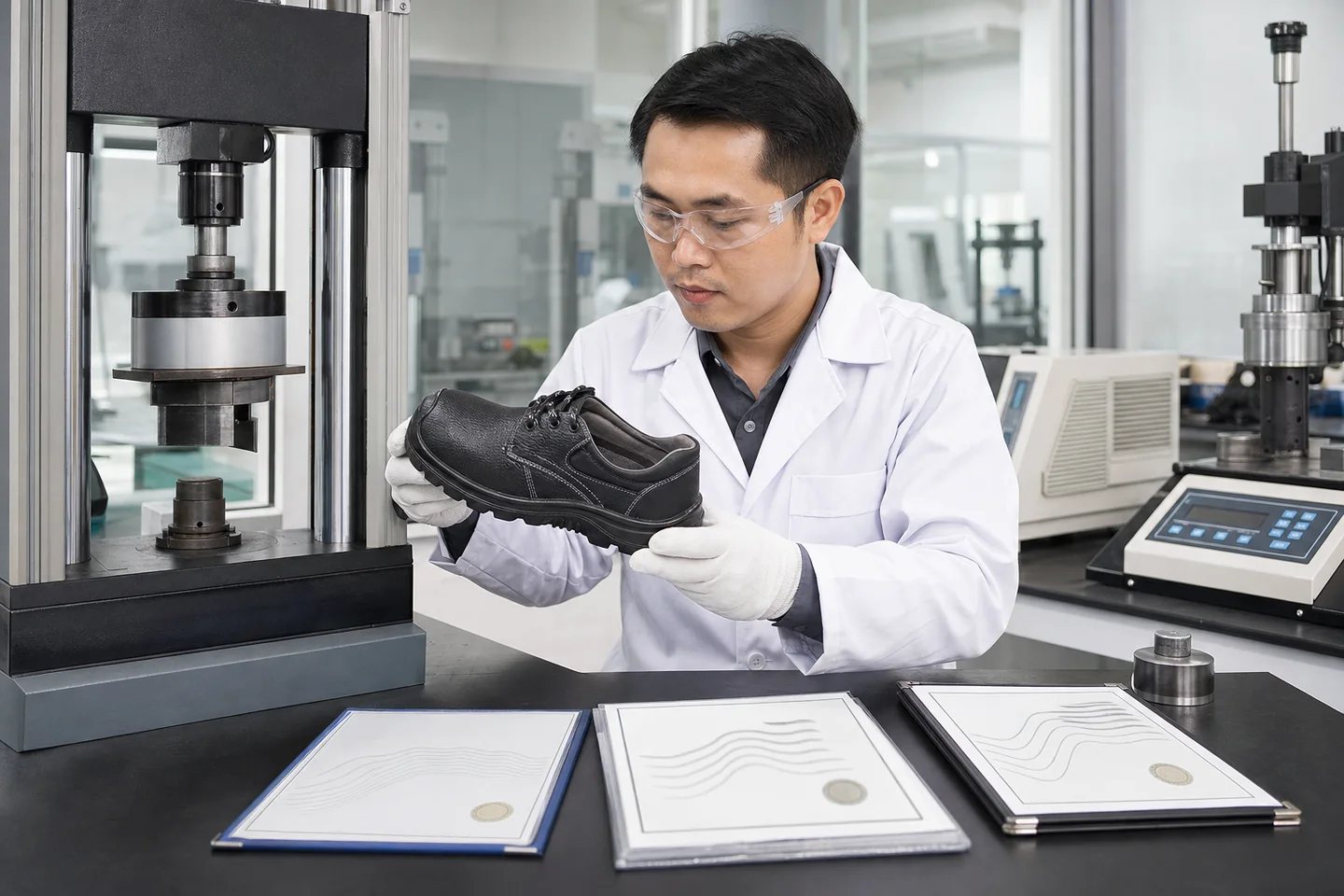
Standards & certification
A practical guide to the standards, approval pathways and model-specific documents used when buying certified safety shoes and boots.
Read guide →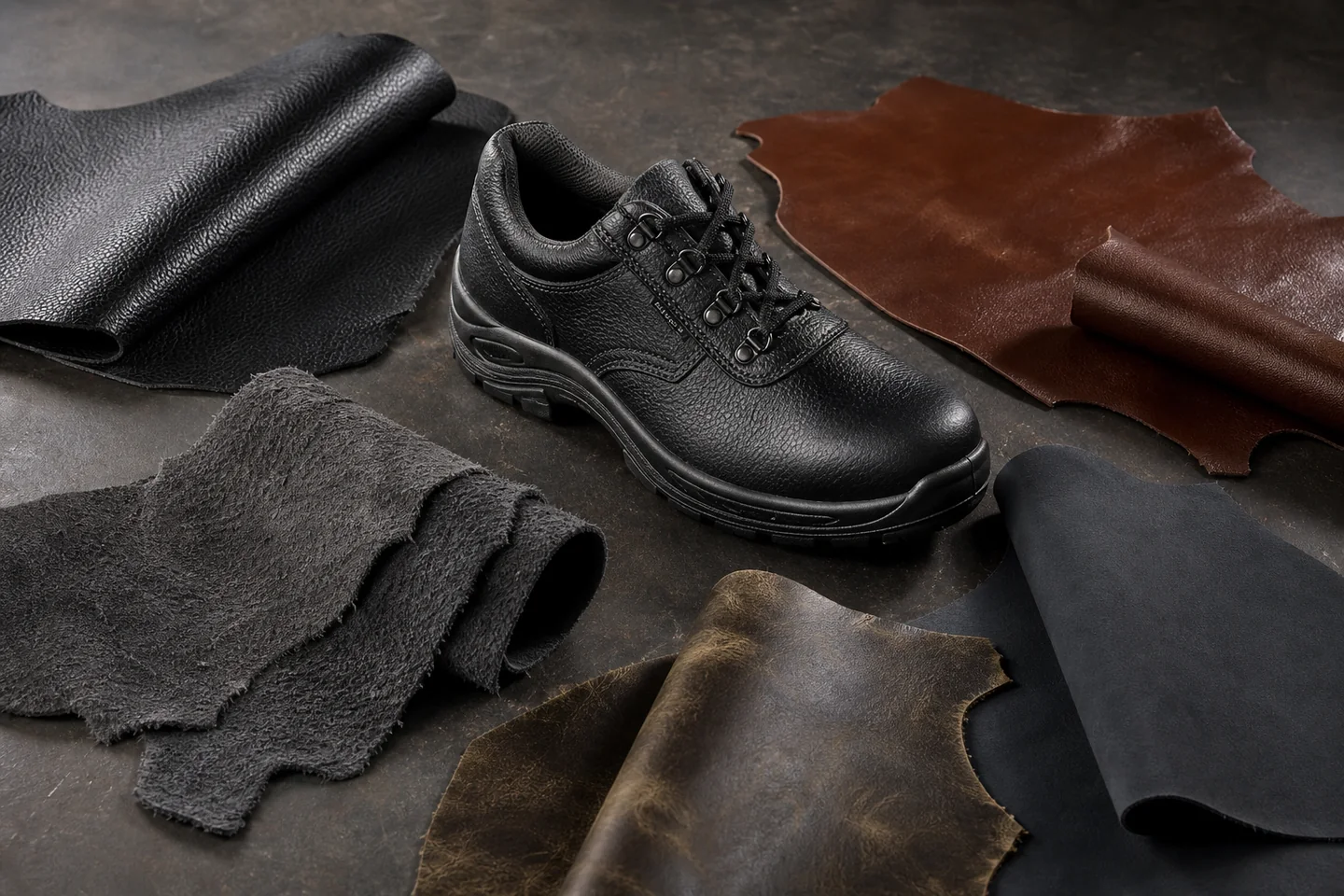
Upper materials
Compare leather and synthetic safety shoe uppers by durability, climate, maintenance, appearance and industrial application.
Read guide →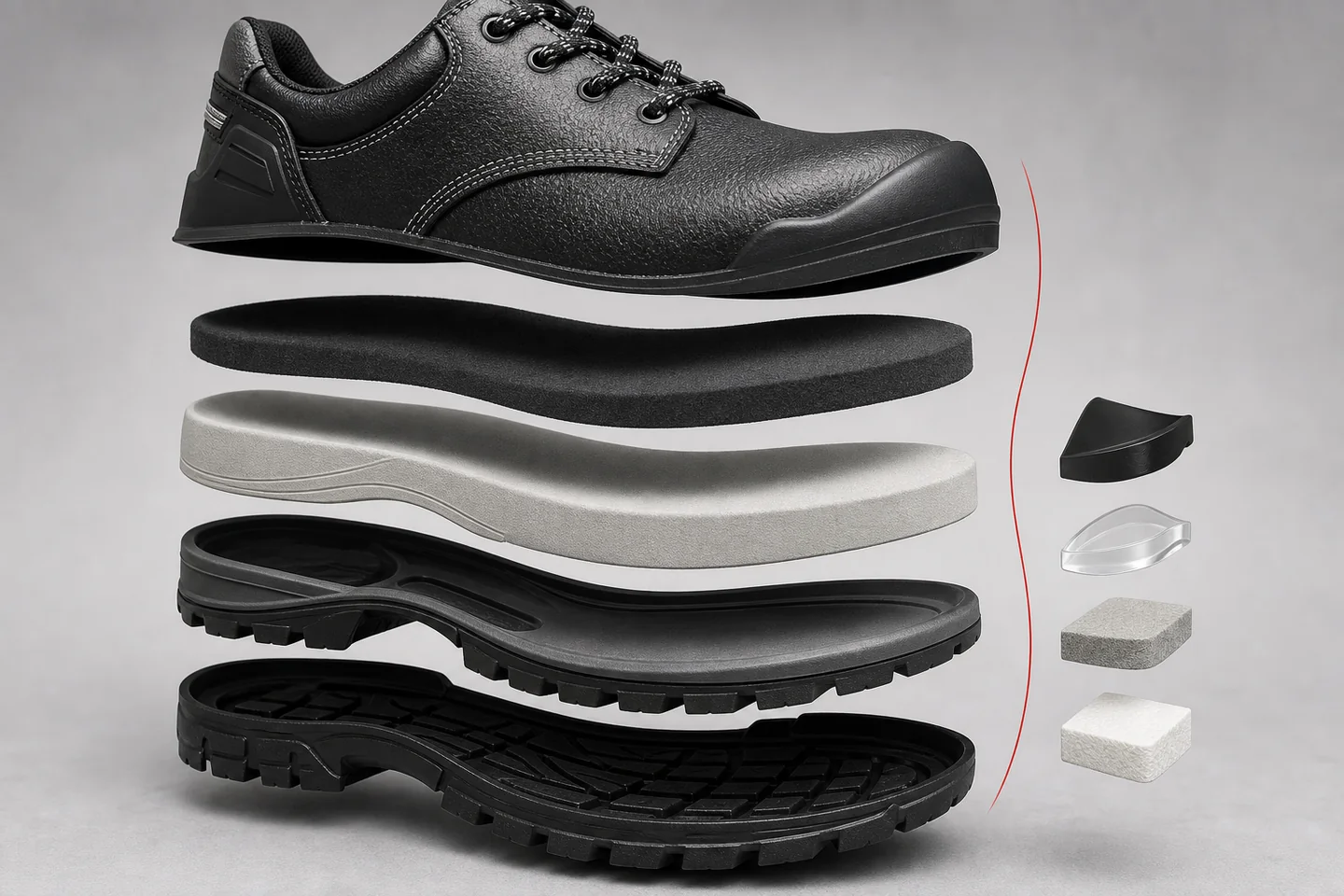
Sole materials & technology
Understand single- and dual-density soles plus PU, NBR, TPU, PVC and EVA material trade-offs for safety footwear.
Read guide →Important: This guide provides general product-selection information. It does not replace a competent risk assessment, the current applicable standard, or the certificate and technical data sheet for the exact footwear model.