Direct answer
What you need to know
Select oil and gas footwear from the site hazard profile: heat-tolerant direct-vulcanised nitrile outsoles for hot, oily surfaces, puncture-resistant inserts for metal debris, and the electrical marking the site requires. Verify the class, markings and current certificate for the exact model before specifying.
Oil and gas work mixes heat, oil, puncture and static risks that change between a refinery floor, a wellsite and a terminal. Footwear selection starts from the site's hazard profile, not from a single "oil & gas" label.
The hazards that drive the specification
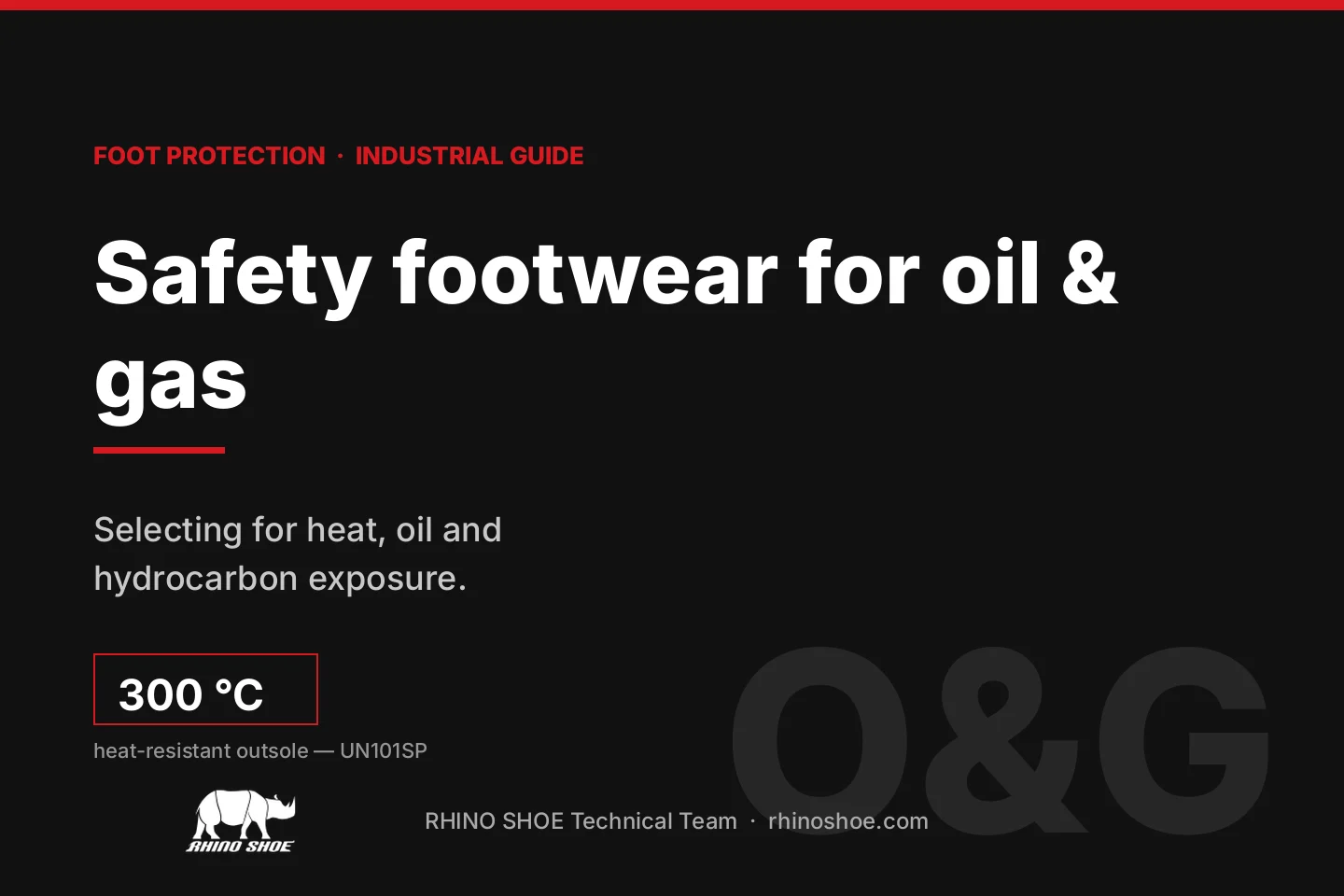
- Heat. Hot surfaces, steam lines and forged components mean the outsole and upper must tolerate contact heat. RHINO SHOE's direct-vulcanised nitrile rubber Ultranite range is specified for this duty; the UN101SP specification lists a heat-resistant outsole up to 300 °C.
- Oil and hydrocarbons. Oil-contaminated decks and floors change slip behaviour. Oil- and chemical-resistant nitrile outsoles are designed for exactly this, paired with a cleated profile where the class calls for one.
- Puncture. Sharp metal, rebar and debris argue for a puncture-resistant insert. The class marking (P, PL or PS) tells you the insert type and test condition.
- Static and ignition. In some areas, antistatic or ESD control is part of the site's electrical safety rules. Confirm the electrical property the site requires rather than assuming it.
- Water and weather. Monsoon conditions add wet-slip and upper-wetting risk; S3-type protection with the appropriate water-resistance marking covers outdoor work.
Why direct-vulcanised nitrile matters here
Direct vulcanisation bonds the outsole to the upper without stitching or adhesive lines that can let oil in. Nitrile rubber is the common outsole material for heat and oil service, and it holds grip on contaminated surfaces better than general-purpose rubber. That is why the Ultranite family is intended for metal fabrication, heavy manufacturing and oil & gas.
Map the model to the site, then verify
- Run a site-specific hazard assessment — the selection rule we apply across all industries.
- Shortlist by class and markings: toe protection, P/PL/PS, slip, water resistance, and FO where fuel-oil resistance matters.
- Request the current technical data sheet and certificate for the exact model and market configuration.
- Confirm size range and replacement lead time before committing a contract.
For electrical maintenance and utility work, RHINO SHOE's Voltguard EH101KP addresses electrical-hazard requirements. See the Oil & Gas industry page and the product range for model details, and our PU vs nitrile outsole guide for the material comparison.
Safety footwear must be selected through a workplace risk assessment. Standards, certification and DOSH–SIRIM approval are model-specific; confirm current documentation before procurement.