Direct answer
What you need to know
Choose safety shoes by assessing the task, impact and puncture hazards, floor contamination, heat or water exposure, electrical conditions, required local approvals and wearer fit. Select a model only after verifying its current certificate and conducting a wear trial where possible.
The best safety shoe is not the model with the longest feature list. It is the certified model that controls the actual hazards, fits the wearer and remains practical throughout the shift.
1. Map the work, not just the job title
Observe where people walk, kneel, climb and stand. A maintenance technician may move between an office, oily plant room, outdoor yard and electrical area in one shift. Each environment adds different requirements.
2. Identify impact and compression risks
Falling tools, rolling stock and material-handling tasks usually drive the need for safety-toe protection. Under EN ISO 20345, safety toe caps are designed around 200-joule impact requirements. The toe material—steel, aluminium or composite—is only one part of the certified footwear system.
3. Check puncture hazards underfoot
Construction debris, nails, swarf and sharp offcuts may require puncture-resistant footwear. Under newer EN ISO 20345 terminology, P, PL and PS identify different insert constructions and test conditions. Ask which marking appears on the exact model.
4. Study the floor and contaminants
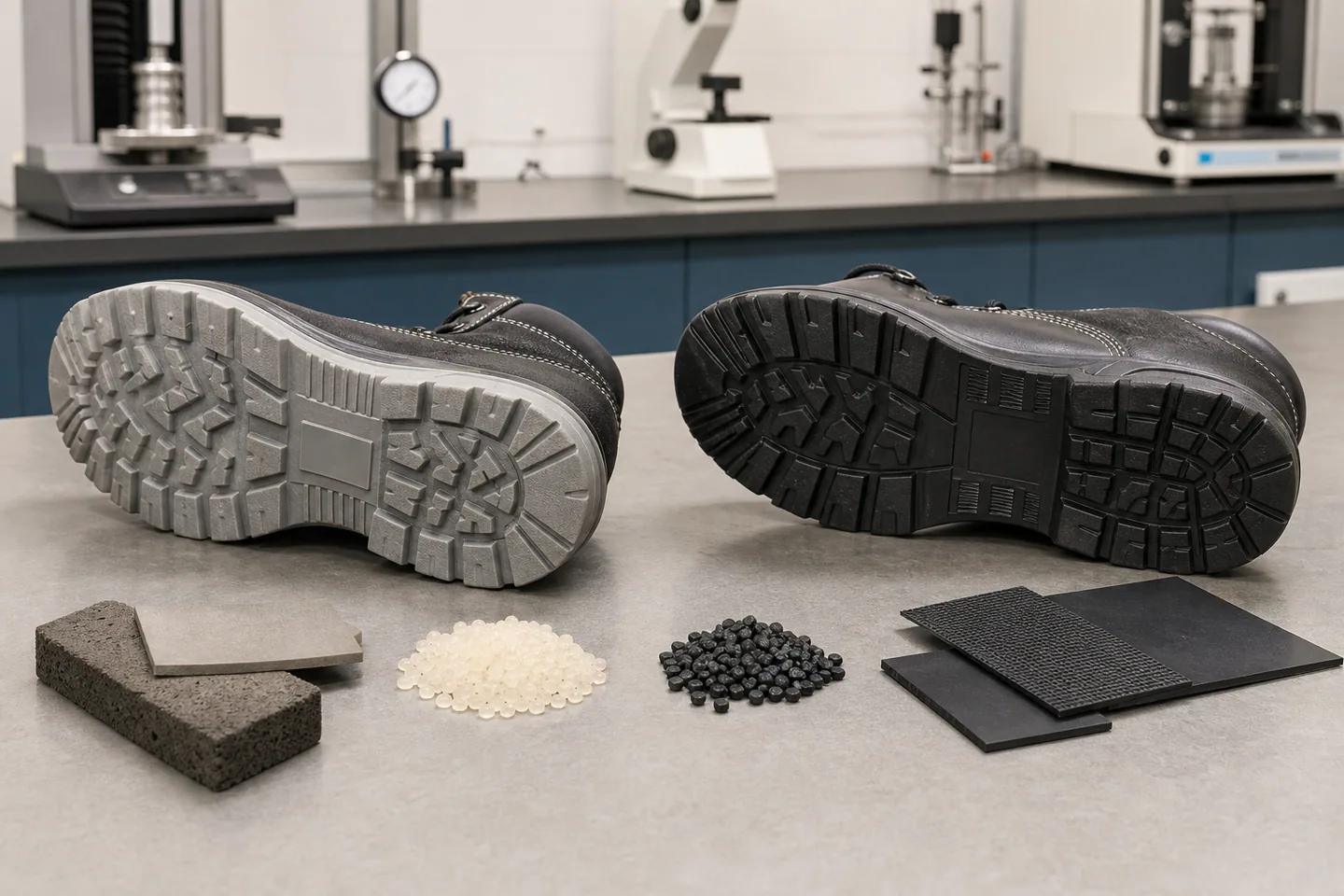
Smooth tiles, oily steel, wet concrete and outdoor soil behave differently. Review the outsole compound and tread, not only a generic “anti-slip” claim. Rubber or nitrile rubber may be preferred for heat and demanding contaminants; polyurethane can reduce weight and offer useful cushioning in many indoor settings.
5. Add environmental and electrical requirements
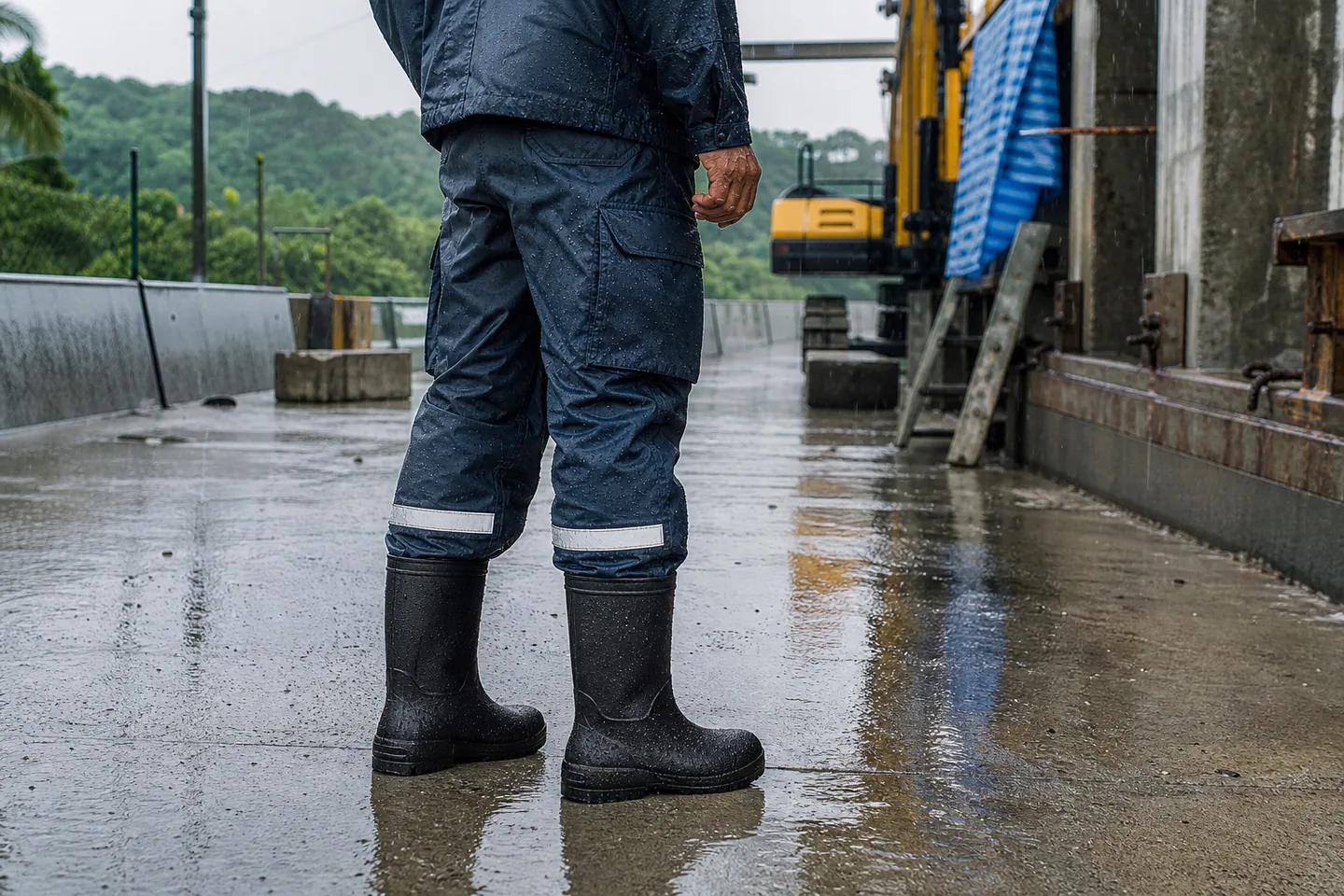
Consider contact heat, water, cold-room exposure, chemicals and electrostatic discharge. ESD footwear for electronics is not the same as electrically insulating footwear for live electrical work. If the site has an ESD control programme, treat footwear as one part of the complete grounded system.
6. Confirm local compliance
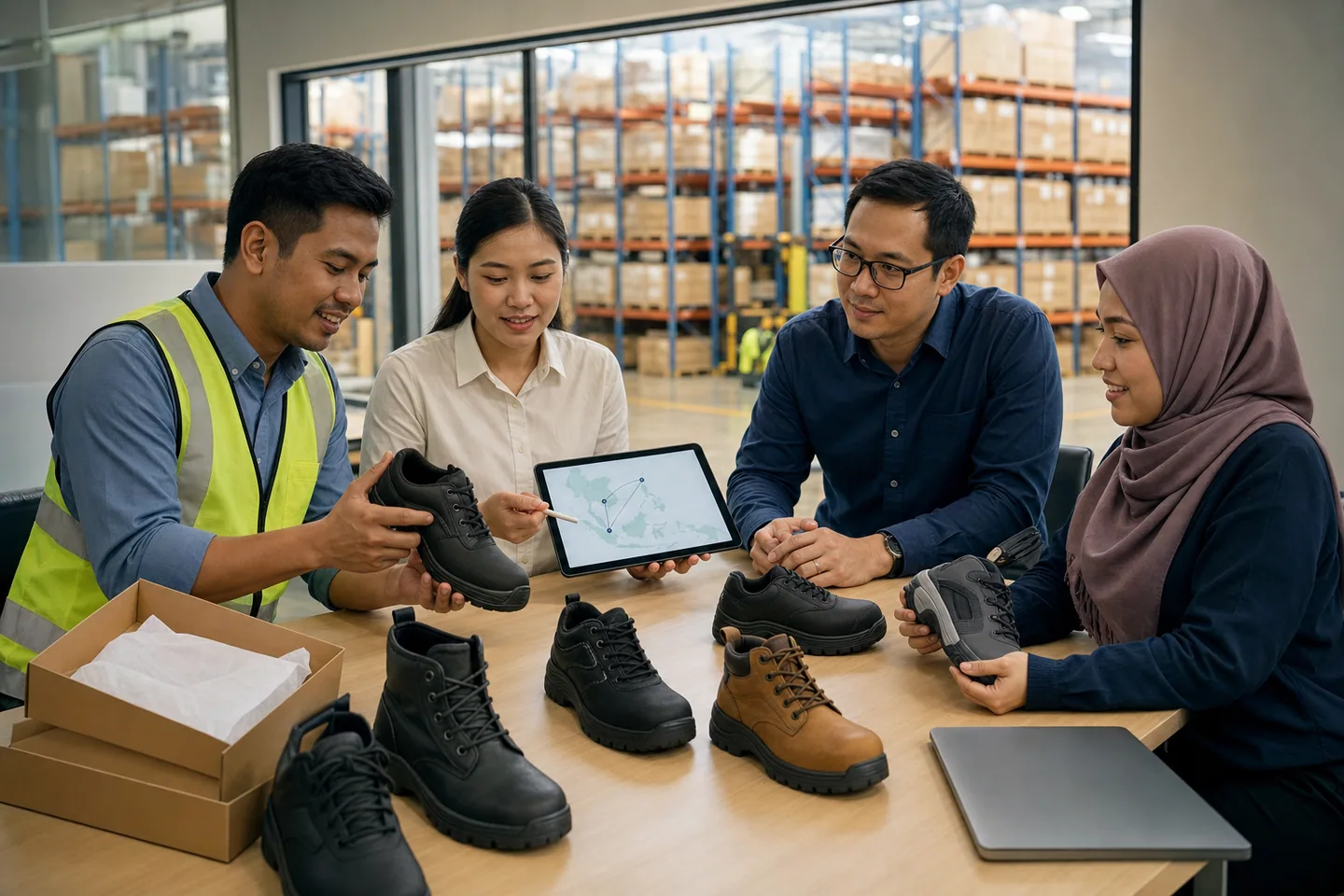
In Malaysia, verify DOSH–SIRIM approval—also commonly searched as SIRIM–DOSH approval—for the exact model when the procurement specification requires approved PPE. In Singapore, check the applicable SS 513 or EN ISO documentation with your safety team. For Singapore supply support, visit Safetyware Singapore. In Thailand, Safetyware Alliance can support broader workplace-safety enquiries.
7. Trial fit and monitor use
Size labels are not a fit test. Trial the shoe with the socks workers will use, preferably later in the day when feet may be slightly larger. Check heel hold, toe clearance, width and pressure points. After rollout, monitor slip reports, discomfort, premature wear and whether people actually keep the footwear on.
A procurement-ready checklist
Record the hazard assessment, required standard and markings, local approval, model code, certificate edition, size distribution, trial feedback, care method and replacement criteria. This turns footwear selection into a repeatable safety process rather than a price-only purchase.
Safety footwear must be selected through a workplace risk assessment. Standards, certification and DOSH–SIRIM approval are model-specific; confirm current documentation before procurement.