Direct answer
What you need to know
Regional employers should standardise the selection process and technical evidence rather than forcing one shoe onto every site. Use a common hazard matrix, verify each market's accepted standards and approvals, run local fit trials and maintain model-level documentation.
A regional footwear programme can reduce complexity, improve data quality and strengthen buying power. It can also fail if headquarters chooses one model without accounting for local approval, climate, fit and work practices.
Standardise the method before the model
Create a common hazard matrix covering impact, puncture, slip, water, heat, chemicals, electrical risks, hygiene and walking distance. Let each site map its jobs to that framework. This makes comparisons consistent even when the final footwear differs.
Build a model-level evidence pack
For every approved model, retain the technical data sheet, certificate and edition, test markings, local approval where applicable, declaration of conformity, size range, care guide and supplier contact. Track expiry and revision dates.
In Malaysia, check DOSH–SIRIM approval or SIRIM–DOSH approval for the exact model where required. In Singapore, confirm the accepted SS 513 or EN ISO evidence for the project. Other Southeast Asian markets may apply different national rules, tender conditions or customer requirements.
Separate mandatory and preferred features
Mandatory features control identified hazards. Preferred features improve comfort, appearance or procurement efficiency. Keeping them separate prevents a popular design feature from displacing a critical protection requirement.
Use local wearer trials
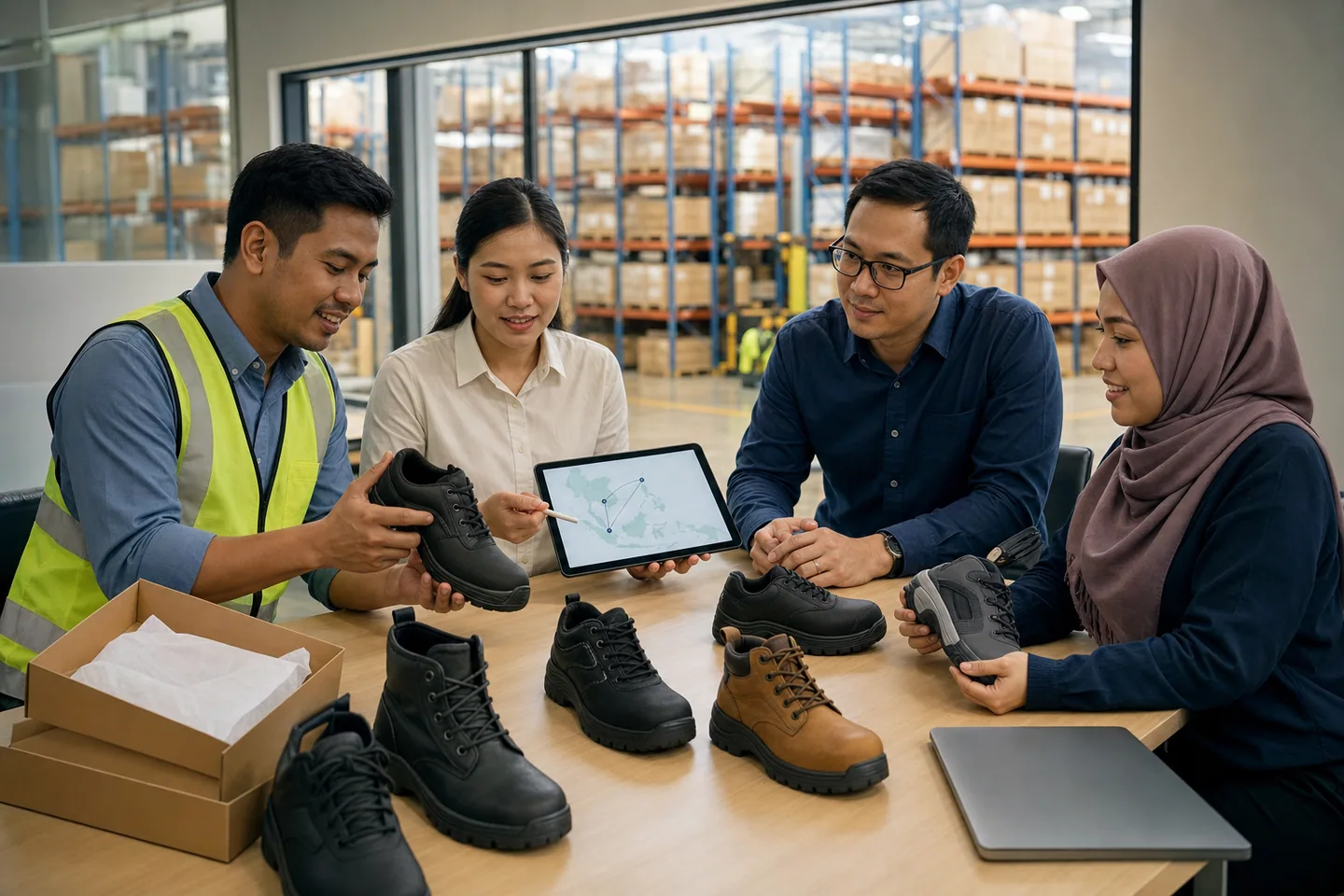
Feet, tasks and expectations vary. Trial representative sizes with women and men across different jobs and shifts. Record comfort, fit, grip, heat, weight and durability. A regional shortlist can still include multiple widths, cuts or outsole systems.
Plan sizes and replenishment
Collect actual foot measurements rather than ordering only from past issue records. Maintain a core size curve locally and agree lead times for outliers. Define how damaged pairs, new hires and project surges will be handled.
Manage transitions between standards
Legacy and newer EN ISO 20345 certificates may coexist. Product codes such as S1P and S3 cannot always be compared directly with S1PL, S1PS, S3L, S3S, S6 or S7 without checking the edition and markings. Procurement systems should store the full standard reference, not only the class.
Connect regional and local support
Safetyware Sdn. Bhd. supports RHINO SHOE from its Malaysian manufacturing base. Buyers in Singapore can connect with Safetyware Singapore, while Thailand customers can visit Safetyware Alliance. For the Philippines, Vietnam and Indonesia, route enquiries through the regional team with the destination, required documentation and expected volume.
Measure programme performance
Track injury and near-miss data, wearer complaints, replacement frequency, sole wear, size exchanges and cost per wearer-month. The goal is not the lowest purchase price; it is reliable protection that people wear correctly across the full service life.
Safety footwear must be selected through a workplace risk assessment. Standards, certification and DOSH–SIRIM approval are model-specific; confirm current documentation before procurement.