Direct answer
What you need to know
For sustained wet work, select a boot with verified whole-footwear water resistance or a suitable polymer construction, then check toe protection, puncture resistance, slip performance, chemical compatibility and fit. Water-resistant leather alone is not the same as a waterproof boot.
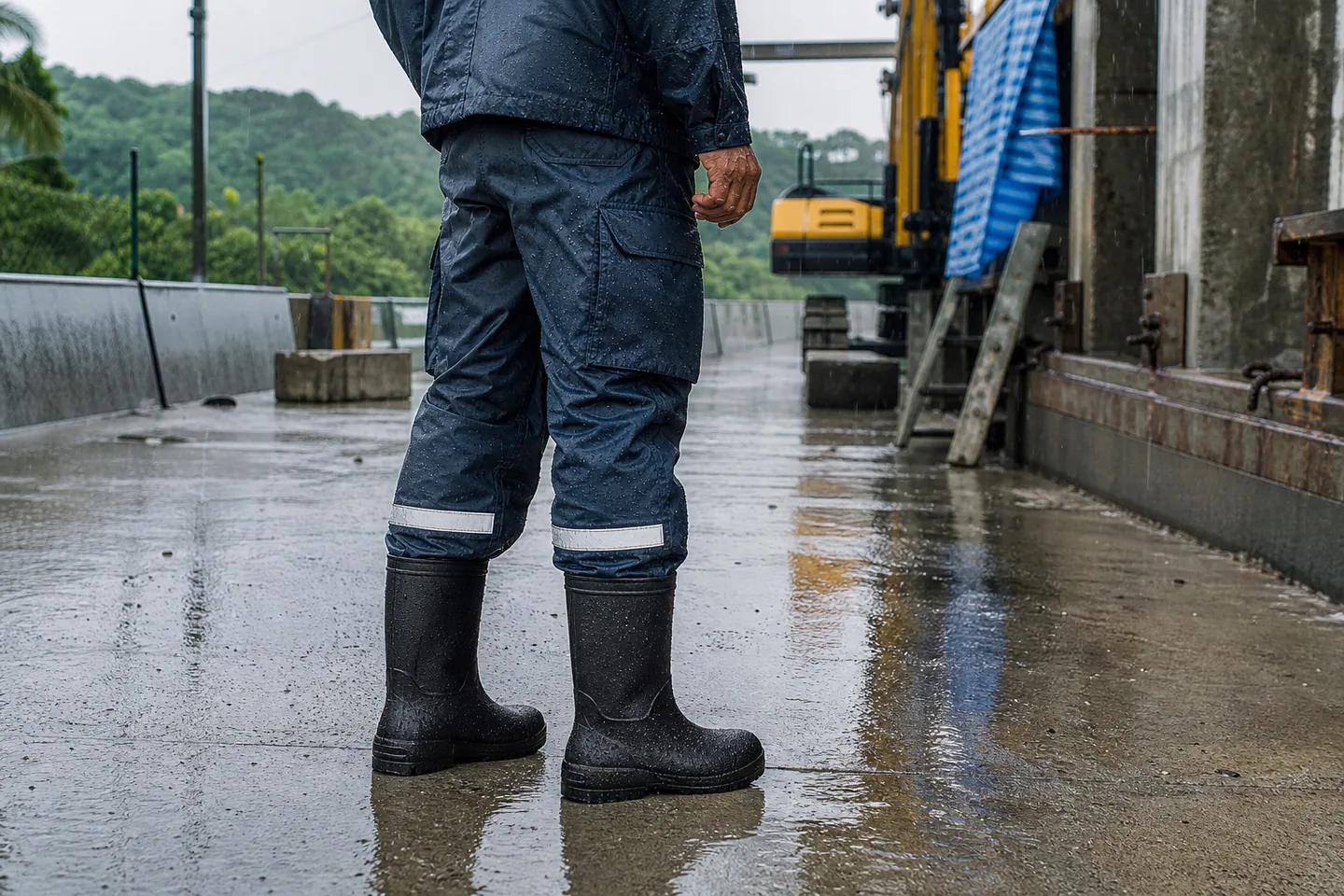
Monsoon rain, flooded access routes, washdown areas and muddy plantations create a simple demand: keep feet dry. Yet “water-resistant” and “waterproof” can describe very different levels of performance.
Water-resistant uppers versus whole-footwear protection
Under newer EN ISO 20345 terminology, WPA relates to water penetration and absorption of upper material. WR addresses water resistance of the whole footwear. S6 and S7 classes incorporate whole-footwear water resistance into S2- and S3-type constructions.
A leather boot with a treated upper may resist brief moisture but can still admit water through seams, the tongue or repeated flex points. A membrane boot or moulded polymer boot can provide a different level of wet protection.
Match the boot to the work
Construction and utilities may require toe and puncture protection together with water resistance. Agriculture and cleaning operations may prioritise high coverage and easy washing. Food processing may add hygiene, fat or chemical exposure. Drainage workers may need chemical information beyond ordinary waterproofing.
Grip is critical
Wet boots are often used on wet floors, ramps and uneven soil. Review slip-test markings and tread design for the actual surface. Deep lugs can help on mud but may retain contamination or feel unstable on smooth factory tiles.
Polymer choice matters
PVC and PU boots differ in weight, flexibility, temperature behaviour and chemical compatibility. Do not assume every polymer boot resists every detergent, oil or agricultural chemical. Request a compatibility chart for significant exposure.
Fit for walking and standing
Oversized boots may slip at the heel and increase fatigue; tight boots restrict the toes and make thick socks uncomfortable. Check calf opening, ankle hold and whether trouser or protective-clothing interfaces shed water outside the boot.
Dry from the inside too
Even waterproof boots accumulate perspiration. Clean and dry the lining, rotate pairs where practical and inspect for cracks, cuts and sole wear. A boot that remains waterproof from the outside can still become unhygienic inside.
RHINO SHOE offers waterproof and safety-boot options for tropical workplaces. For Thailand workplace-safety enquiries, visit Safetyware Alliance; regional buyers can also contact Safetyware Sdn. Bhd. for product support. Confirm the exact model's certification and chemical suitability before issue.
Safety footwear must be selected through a workplace risk assessment. Standards, certification and DOSH–SIRIM approval are model-specific; confirm current documentation before procurement.