Direct answer
What you need to know
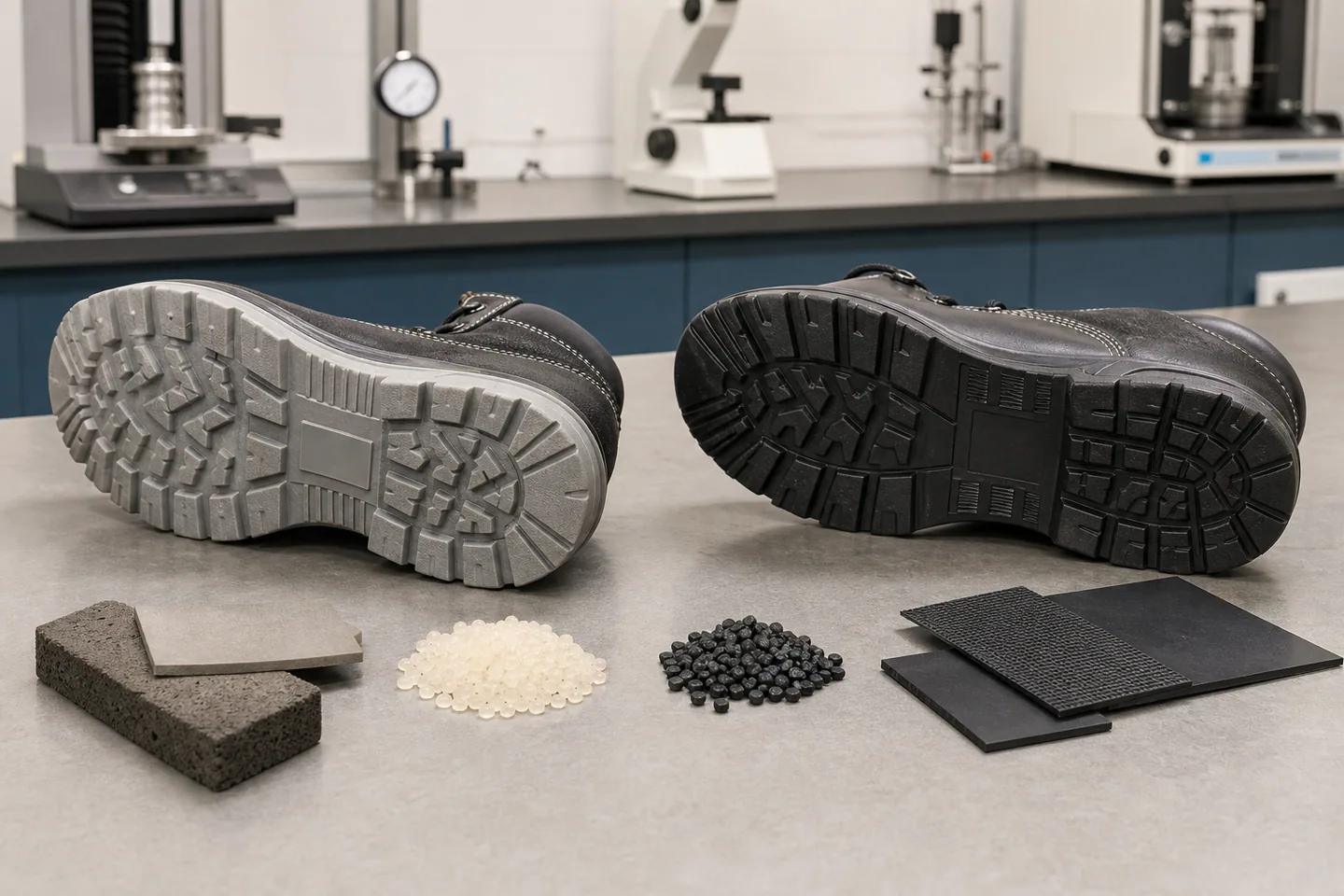
PU outsoles are often lighter and cushioning-focused, making them useful for general indoor work. Nitrile rubber outsoles are commonly selected for higher heat, oil, chemical and abrasion demands. The certified model, compound formulation and tread matter more than the material name alone.
The outsole is the safety shoe's contact point with the workplace. Polyurethane and nitrile rubber are both established materials, but they solve different design priorities.
Polyurethane: lightness and cushioning
PU can be formulated at different densities. Dual-density constructions often use a softer mid-layer for shock absorption and a denser outer layer for wear and grip. This can create comfortable, relatively lightweight footwear for warehouses, assembly plants, logistics and general manufacturing.
PU performance depends on formulation and storage. In humid climates, certain polyester-based PU materials can be affected by hydrolysis over time, especially when footwear is stored for long periods without use. Buyers should follow shelf-life and storage guidance rather than stockpiling indefinitely.
Nitrile rubber: demanding heat and contaminants
Nitrile rubber is commonly selected where heat, oil, chemicals, cuts and abrasion are more severe. Selected HRO-certified footwear can be tested for contact heat up to 300°C under defined laboratory conditions. That marking does not mean unlimited exposure or protection from molten metal.
RHINO SHOE's Ultranite series uses Direct Vulcanised Technology to bond a nitrile-rubber outsole directly to the upper. This construction is aimed at demanding industrial use while maintaining flexibility and durability.
Compound and tread change the result
Not all PU is identical, and not all rubber is identical. Additives, density, hardness, curing, tread pattern and sole geometry influence grip, flex, abrasion and chemical response. Review test markings for the exact model rather than choosing by a generic material label.
A simple selection guide
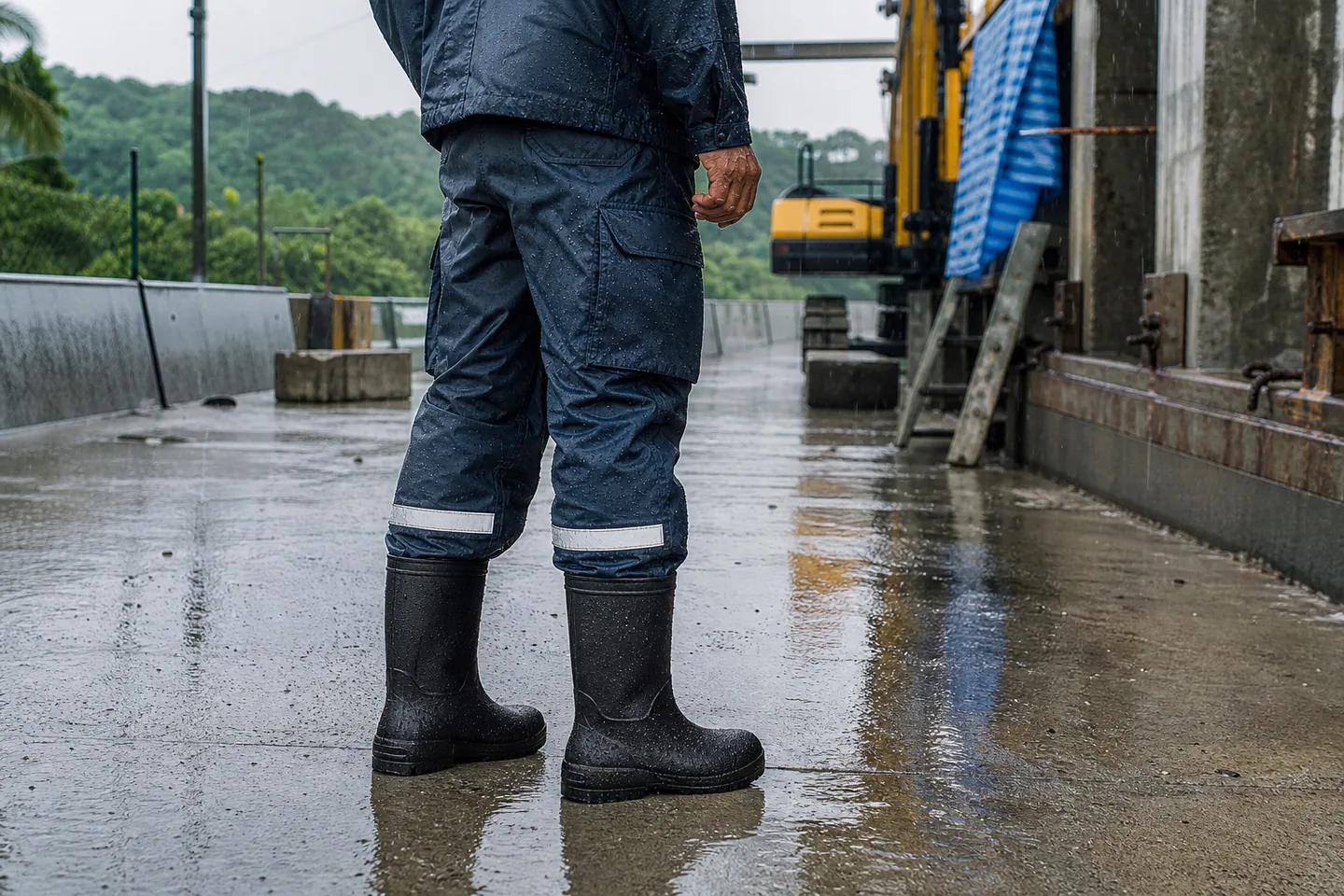
Consider PU when long walking distances, flexibility, cushioning and lower weight are major priorities in moderate indoor conditions. Consider nitrile rubber when contact heat, oil, chemicals or severe abrasion are prominent hazards. Waterproof polymer boots may use PVC or PU constructions for wet and hygiene-sensitive work.
Questions for the supplier
Ask about HRO, FO and slip markings; the chemical-resistance chart; expected storage conditions; cleaning limits; and the industries for which the exact sole was designed. Then conduct a controlled wear trial on representative floors.
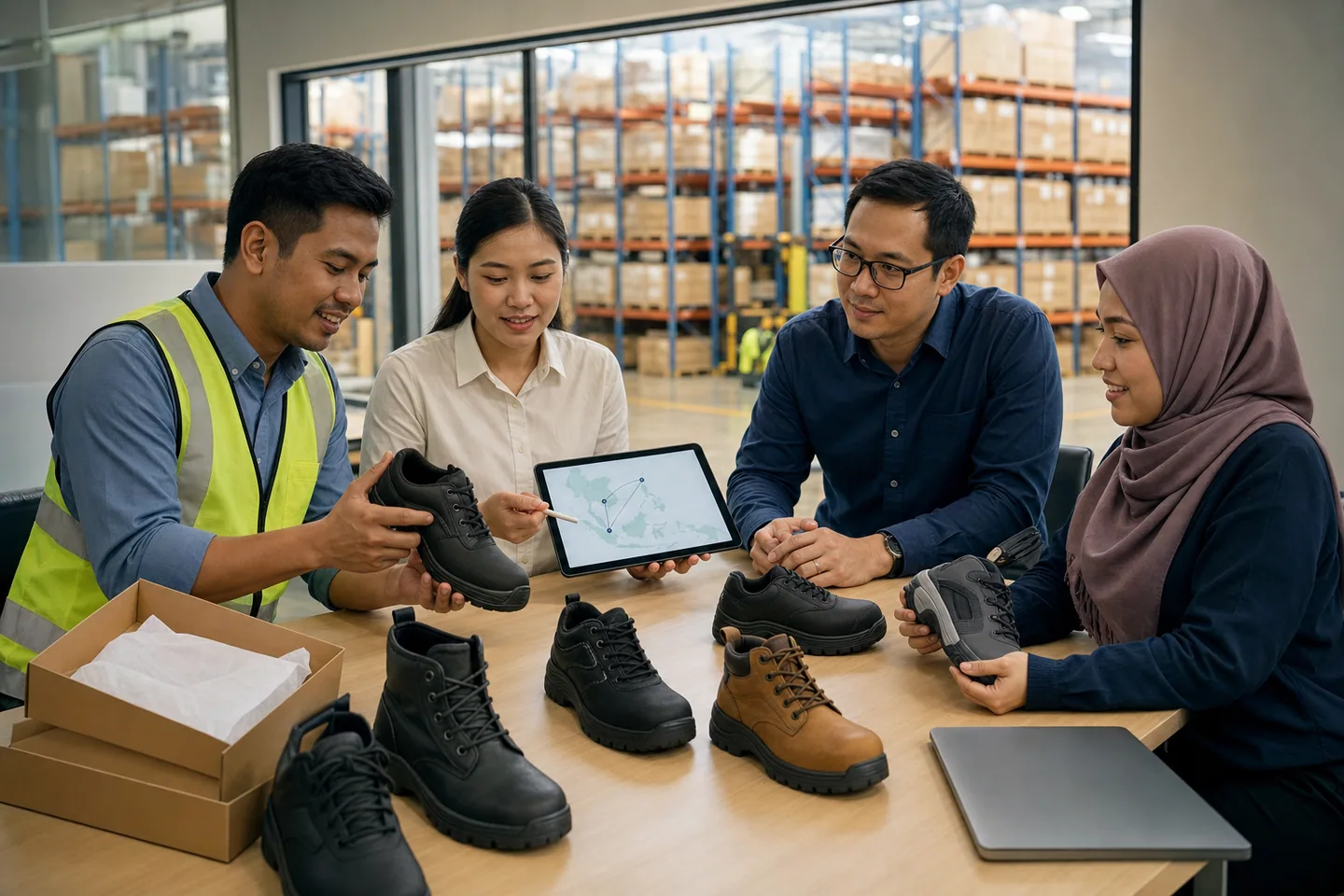
Safetyware Sdn. Bhd. manufactures RHINO SHOE in Malaysia and can help industrial buyers compare outsole systems against the actual work environment.
Safety footwear must be selected through a workplace risk assessment. Standards, certification and DOSH–SIRIM approval are model-specific; confirm current documentation before procurement.