Direct answer
What you need to know
Neither steel nor fibreglass is universally better. Both can meet the same certified 200-joule impact requirement; choose based on the complete shoe's certification, weight, fit, thermal conditions, metal-free needs and workplace hazards.
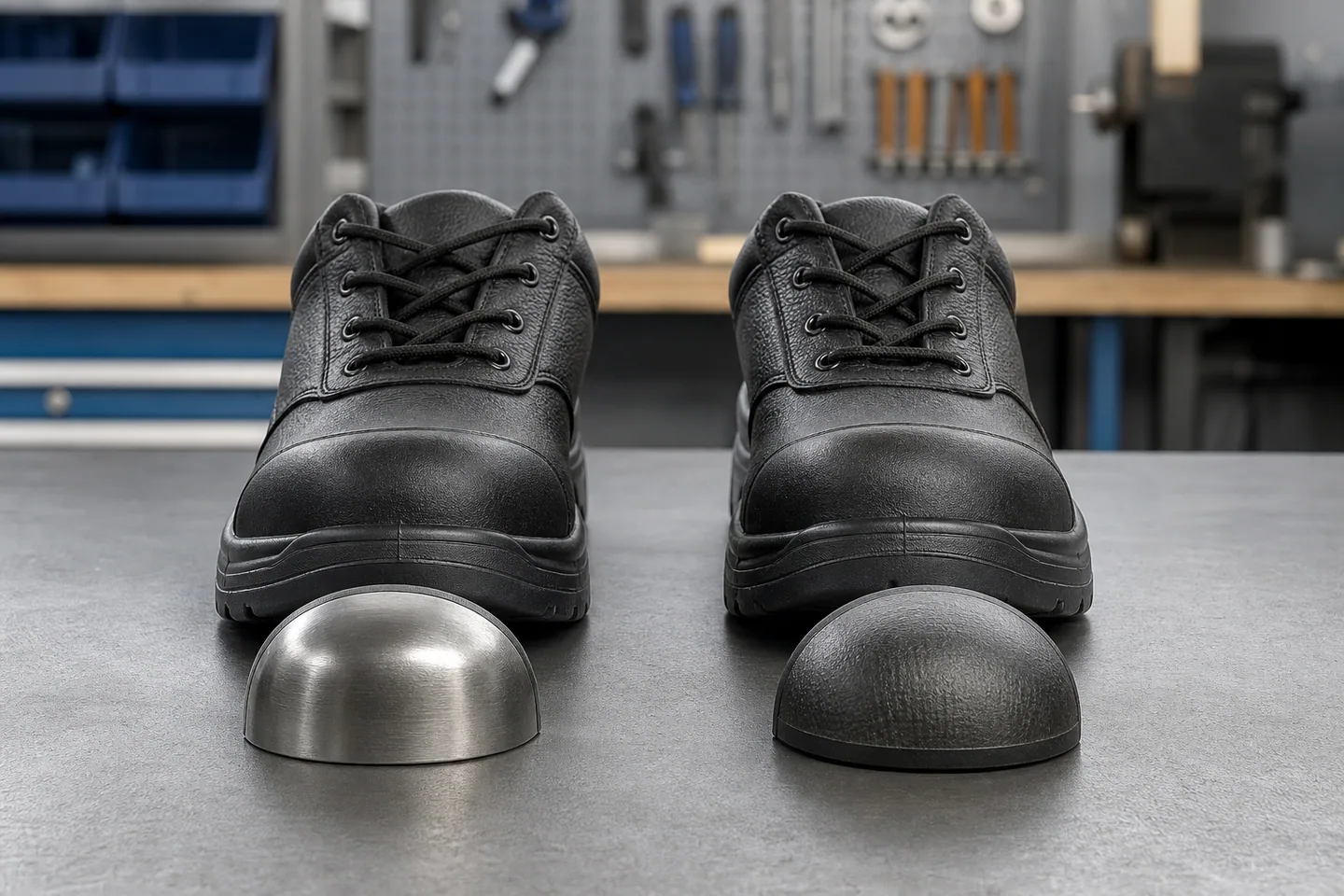
Steel toe caps are traditional, compact and proven. Fibreglass or other composite toe caps are metal-free and can reduce thermal conductivity. The correct choice is not decided by material reputation—it is decided by certified performance and workplace suitability.
Impact protection can be equivalent
Under EN ISO 20345, a certified safety-toe system is assessed for impact and compression performance. A compliant steel cap and a compliant fibreglass cap can both meet the required protection level. The cap must be evaluated as part of the complete shoe, including the upper, lining and sole construction.
Why buyers choose steel
Steel caps can use relatively thin sections, helping create a compact protective shape. They are widely available, familiar to safety teams and resistant to ageing when properly protected from corrosion.
Potential trade-offs include weight, thermal conductivity and triggering metal detectors. Poorly designed footwear may also feel narrow, although fit depends on cap shape and last—not steel alone.
Why buyers choose fibreglass or composite
Metal-free toe caps are useful where metal detection, security screening or thermal transfer is a concern. They may contribute to a lighter-feeling product and can be shaped with generous toe room.
The trade-offs vary by design. Some composite caps need thicker walls or more volume to achieve the required performance. “Composite” is a broad term, so ask whether the cap is fibreglass, carbon composite or another material.
Four questions that matter more than material
- Does the exact model carry the required safety-footwear certification?
- Does the toe box fit the worker without pressure on the toes?
- Is the overall shoe suitable for heat, puncture, slip and electrical hazards?
- Does the worksite require metal-free footwear?
Malaysia procurement note
If a tender requires DOSH–SIRIM approved safety shoes, verify the model and approval number rather than assuming that a toe-cap material itself is “SIRIM approved.” Approval applies to the complete product configuration.
RHINO SHOE uses different protective constructions across its range, including a verified fibreglass 200 J toe cap in the Ultranite UN101SP. Compare the full data sheet and fit before making a fleet-wide choice.
Safety footwear must be selected through a workplace risk assessment. Standards, certification and DOSH–SIRIM approval are model-specific; confirm current documentation before procurement.