Direct answer
What you need to know
Choose slip-resistant safety shoes by matching tested performance, outsole compound and tread design to the actual floor and contaminants. No slip rating guarantees zero falls; cleaning, drainage, housekeeping and replacement of worn soles remain essential.
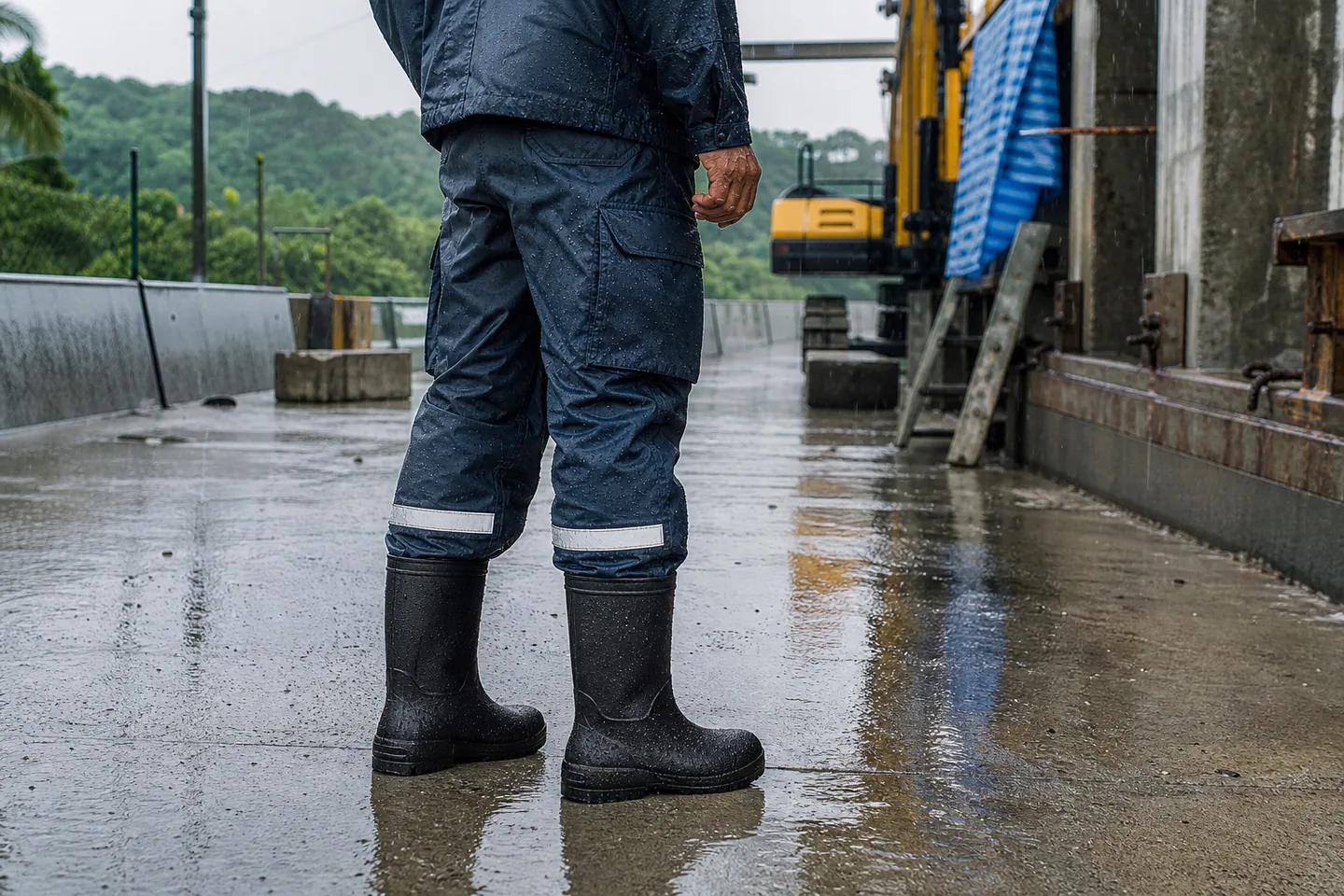
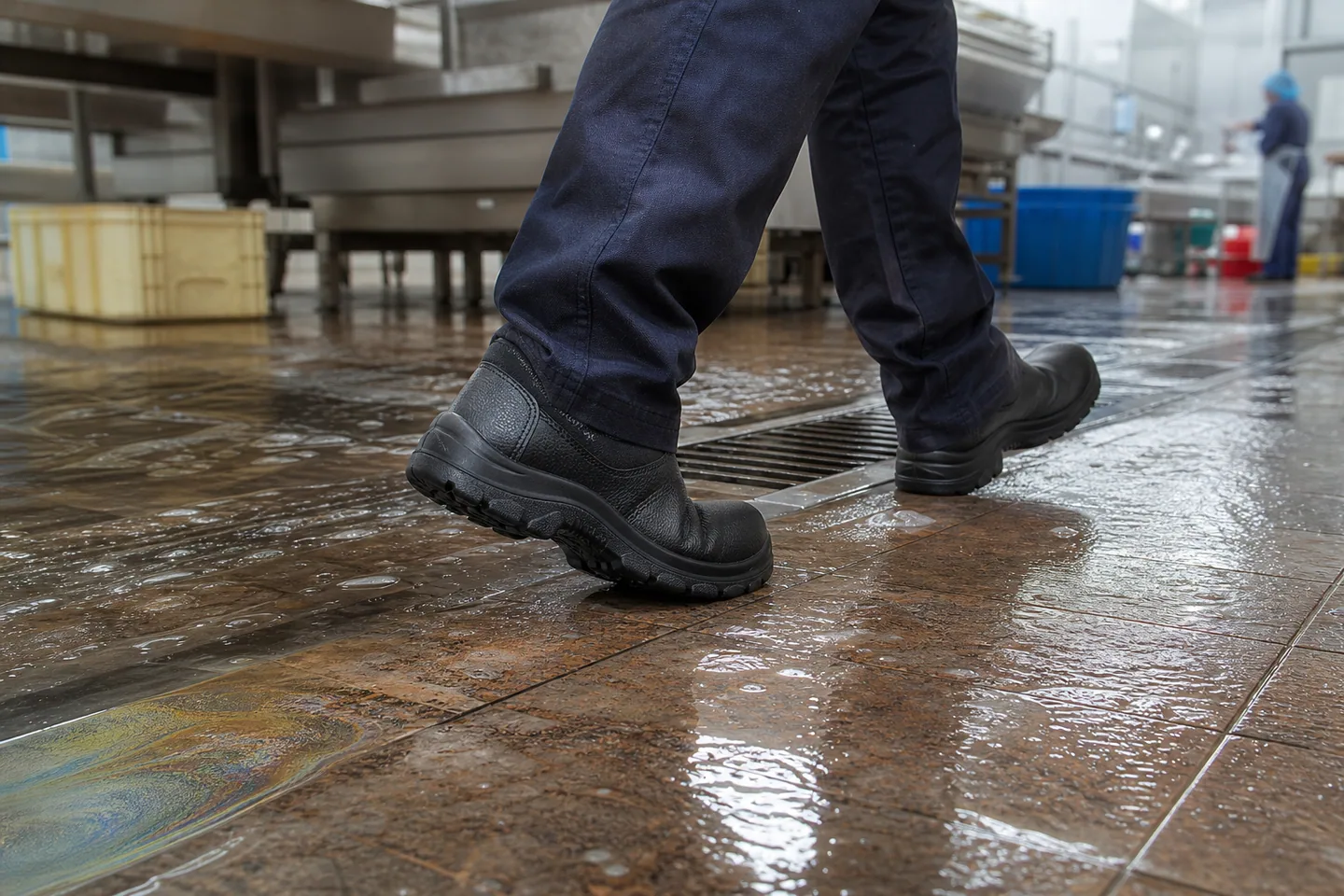
Rain, washdown water, cooking oils, hydraulic fluid and fine tropical dust can turn a normal walkway into a high-risk surface. The words “anti-slip” on a box are not enough to manage that risk.
Slip resistance is a system
A slip event involves the shoe, floor, contaminant, task and person. A tread that performs well on wet ceramic may behave differently on oily steel. Fast turning, carrying a load or walking down a ramp increases the demand on the shoe-floor interface.
The newer EN ISO 20345 framework includes a basic slip test and an optional SR marking for additional test conditions. Older products may show SRA, SRB or SRC under the previous edition. Always compare the marking with the certificate edition.
Look at outsole compound and tread together
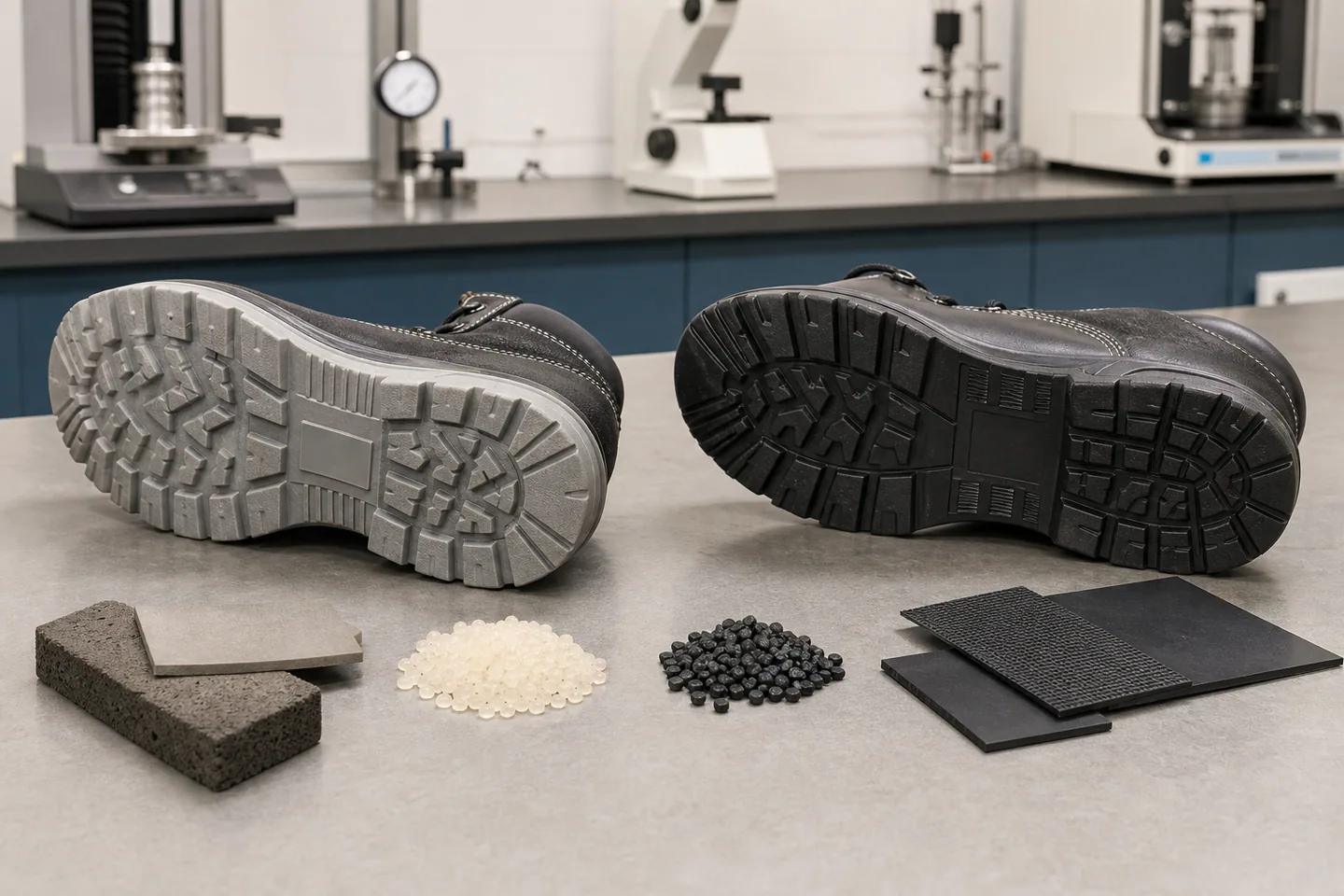
Polyurethane outsoles can offer useful cushioning, flexibility and lower weight for many indoor workplaces. Nitrile rubber is often selected for higher heat, oil, chemical and abrasion demands. Compound alone does not determine performance: tread geometry, contact area, flex and wear condition also matter.
Deep channels can help move liquid, while open tread reduces clogging. However, aggressive lugs may feel less stable on smooth indoor floors. This is why workplace trials on representative surfaces are valuable.
Tropical sites have special challenges
Outdoor-to-indoor transitions bring water and grit through entrances. Food plants and commercial kitchens use frequent washdowns. Palm oil, machining coolant and fuel residues create different contamination. High heat can also affect worker gait and perspiration, increasing fatigue.
Start by mapping where slips occur and what was on the floor. Then select footwear alongside engineering controls such as drainage, mats, floor treatment, spill containment and cleaning schedules.
Inspect and replace before grip disappears
Check for smooth tread, cuts, embedded metal, hardened material, sole separation and uneven wear. Clean according to the manufacturer's instructions; harsh solvents can damage some compounds. Replace the footwear when tread depth or material condition no longer supports safe use.
A practical trial
Issue trial pairs to workers from different shifts and job functions. Record comfort, stability, contamination pickup, cleanability and near-slip feedback over several weeks. Avoid deliberately creating a hazardous walking test.
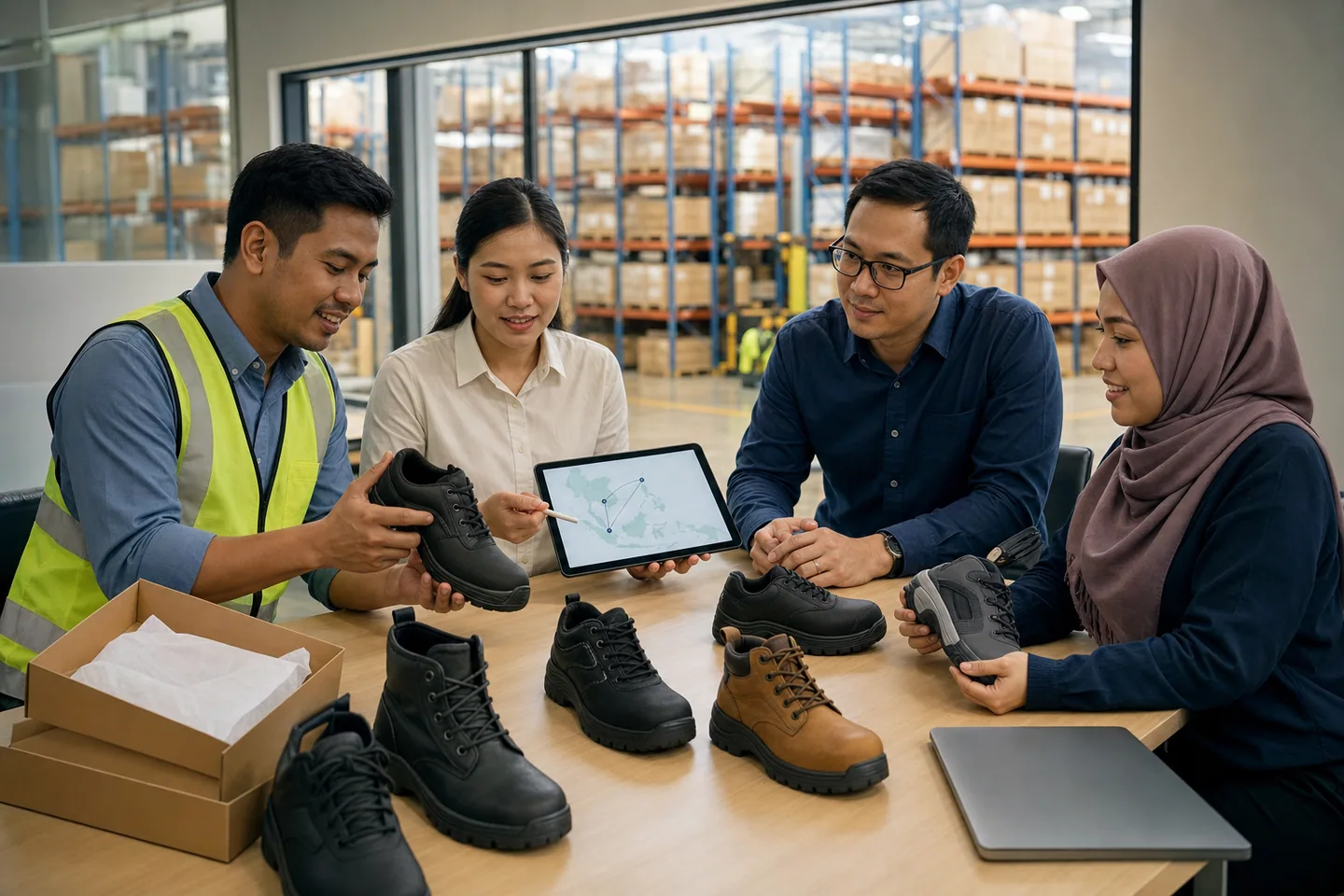
For regional programmes, keep the same evaluation method across Malaysia, Singapore, Thailand, the Philippines, Vietnam and Indonesia while allowing different models for different hazards. Safetyware Sdn. Bhd. can support broader PPE and site-safety discussions alongside RHINO SHOE selection.
Safety footwear must be selected through a workplace risk assessment. Standards, certification and DOSH–SIRIM approval are model-specific; confirm current documentation before procurement.