Direct answer
What you need to know
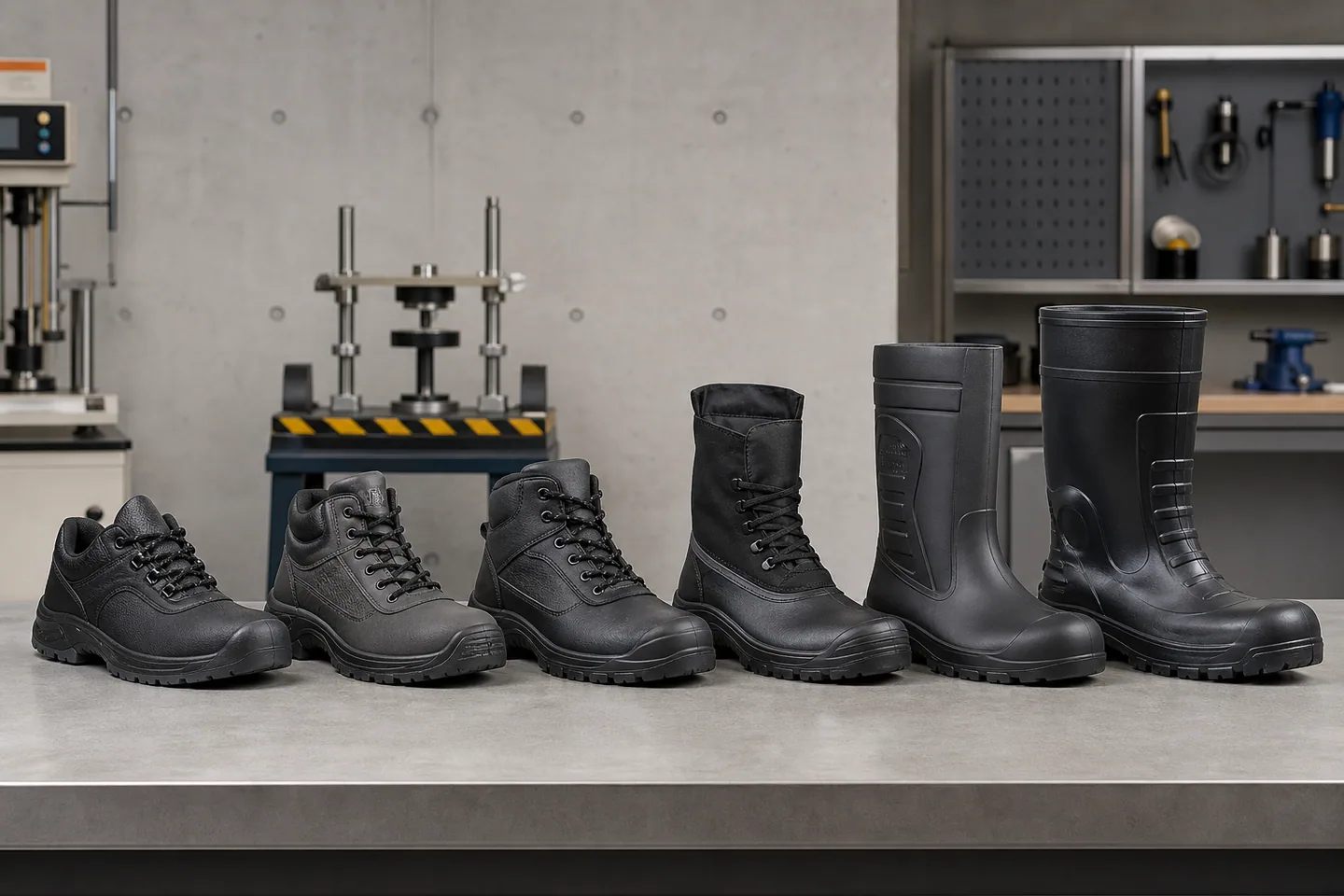
S1P generally suits dry workplaces needing puncture resistance; S3 adds water-resistant upper requirements and a cleated outsole. Under the newer standard, S3L and S3S identify non-metallic puncture inserts, while S6 and S7 add whole-footwear water resistance to S2- and S3-type requirements respectively.
Safety footwear classes are bundles of requirements. They help narrow the search, but they do not describe every property a workplace may need.
Start with SB and S1
SB is the basic safety-footwear category and includes the protective toe requirement. S1 adds a closed heel area, antistatic properties and heel energy absorption. In the newer standard, fuel-oil resistance is identified separately by FO rather than assumed from the class.
S1 footwear is commonly considered for dry indoor environments such as assembly, warehousing and light manufacturing—subject to the actual risk assessment.
What S1P means
Under the older classification system, S1P combines S1 properties with penetration resistance. It is familiar across Malaysia and Singapore because many established certified models still carry that marking.
Under the newer system, buyers may instead see S1P, S1PL or S1PS, distinguishing metallic and non-metallic puncture-resistant inserts and their test conditions.
S3, S3L and S3S
S3 is widely associated with outdoor and construction use because it adds water penetration and absorption requirements for the upper, puncture resistance and a cleated outsole. Newer labels separate the puncture insert:
- S3 uses a metallic P insert
- S3L uses a non-metallic PL insert tested with a 4.5 mm nail
- S3S uses a non-metallic PS insert tested with a 3.0 mm nail
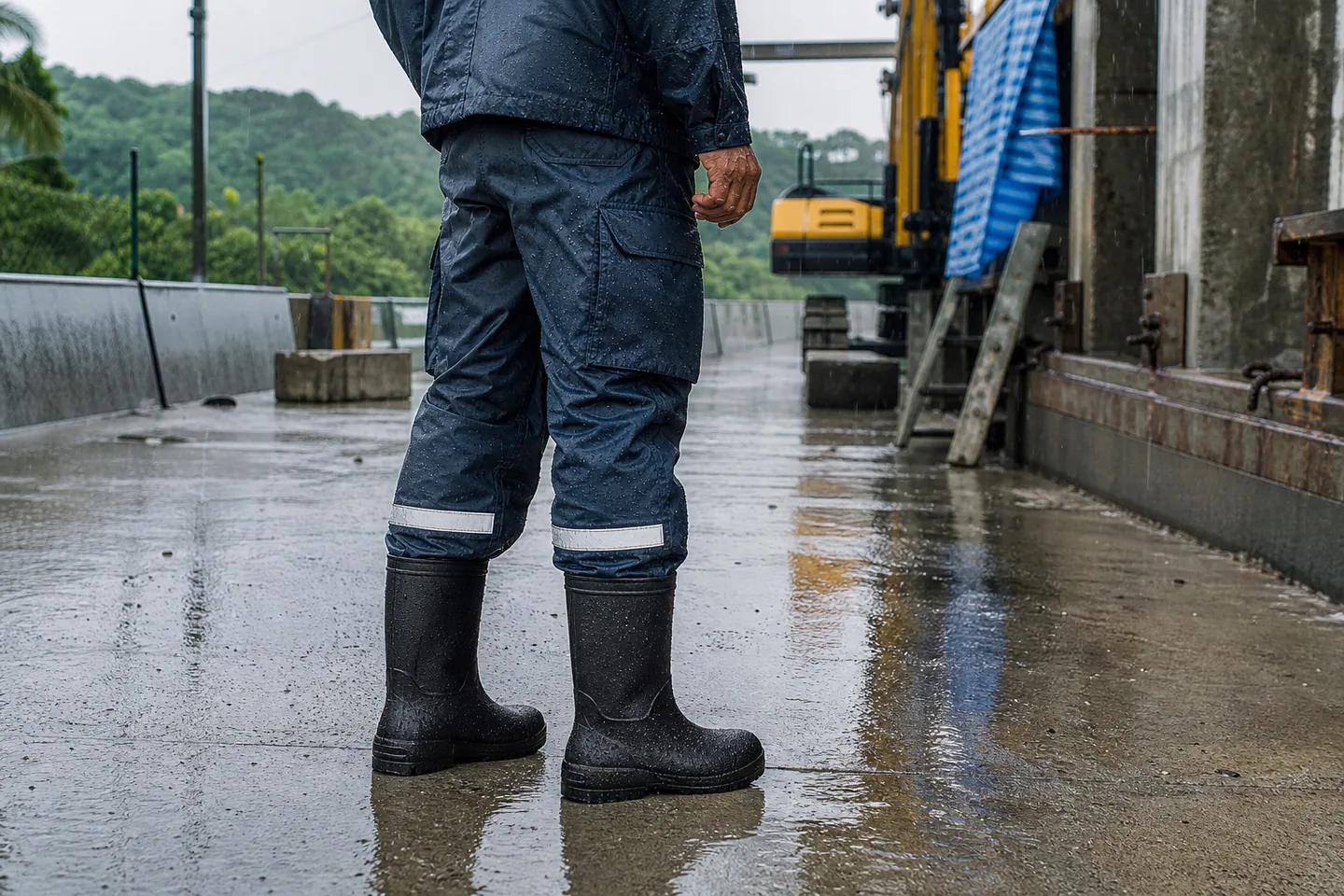
Water-resistant upper material is not the same as a fully waterproof shoe. Prolonged rain, standing water or repeated flexing can demand a whole-footwear water-resistance rating.
S6 and S7
S6 adds whole-footwear water resistance to an S2-type construction. S7 adds it to an S3-type construction, including puncture resistance and a cleated outsole. S7L and S7S again identify non-metallic insert types.
For tropical construction, utilities, plantations and wet outdoor logistics, these categories offer a clearer way to specify water performance. Polymer boots may use different categories such as S4 or S5.
Additional markings still matter
Look beyond the class for properties such as HRO contact-heat resistance, FO fuel-oil resistance, SR additional slip resistance, CI cold insulation, HI heat insulation, ESD suitability or metatarsal protection.
What should a buyer put in a specification?
State the workplace hazards first, then the required standard edition, class, additional markings, local approval and evidence. Malaysian tenders may also require current DOSH–SIRIM or SIRIM–DOSH approval for the exact safety shoe model.
If two products use different editions of the standard, do not compare their codes as though the labels are identical. Ask for both certificates and let a competent safety professional interpret them against the job.
Safety footwear must be selected through a workplace risk assessment. Standards, certification and DOSH–SIRIM approval are model-specific; confirm current documentation before procurement.