Direct answer
What you need to know
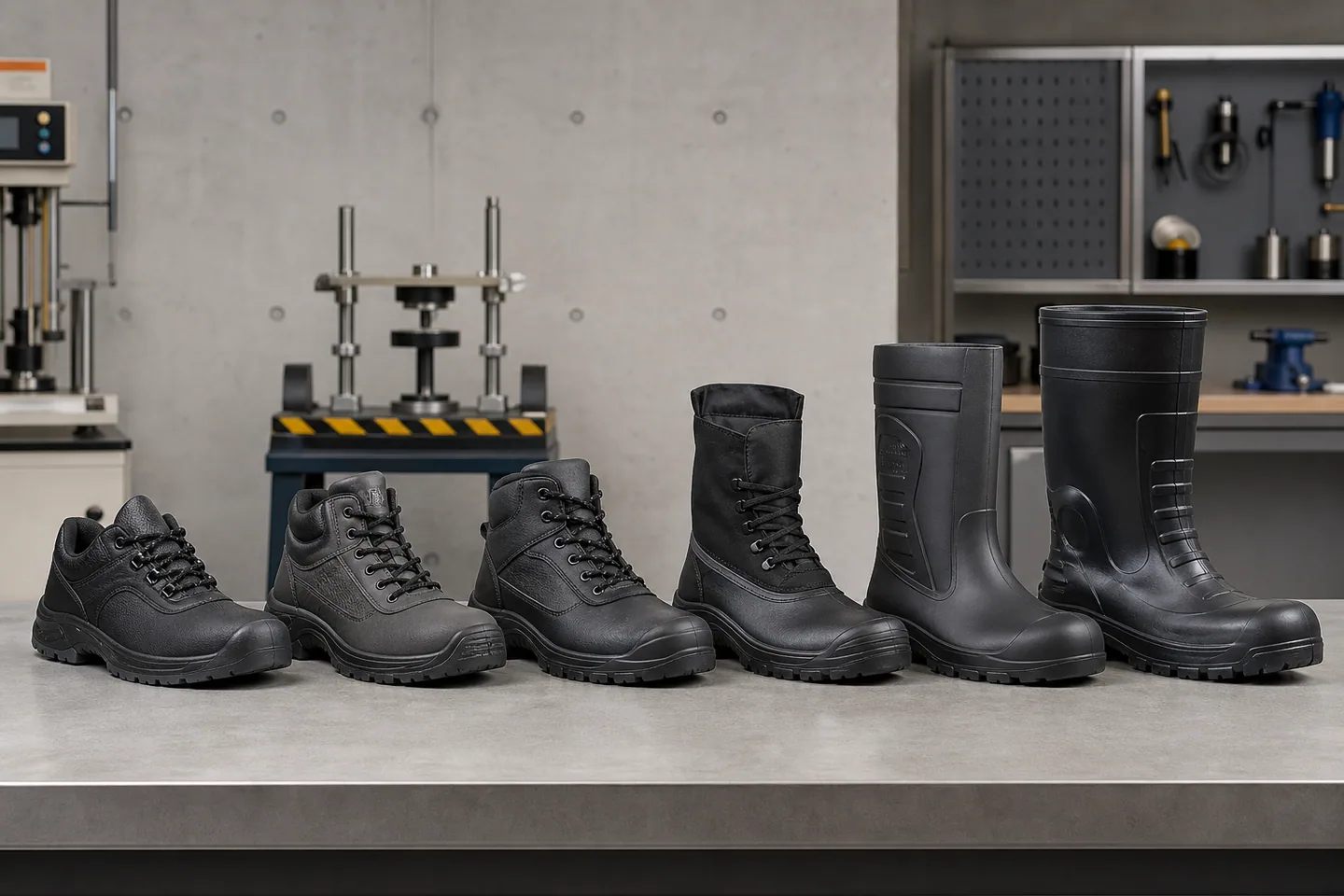
ISO 20345:2021 is the current international base standard for general-purpose safety footwear, with Amendment 1 published in 2024. European products commonly reference EN ISO 20345:2022 and EN ISO 20345:2022+A1:2024; the newer framework adds S6/S7 classes and distinguishes P, PL and PS puncture-resistant inserts.
Safety footwear markings have changed significantly from the familiar EN ISO 20345:2011 system. For Southeast Asian buyers comparing new and legacy stock, the first step is understanding which edition appears on the certificate and product marking.
The current international base document is ISO 20345:2021, with Amendment 1 published in 2024. In European markets, buyers commonly see EN ISO 20345:2022 and EN ISO 20345:2022+A1:2024 because of the timing of regional adoption and amendment.
What stayed fundamental
Safety footwear under ISO 20345 includes a protective toe cap tested for 200-joule impact requirements, together with construction, ergonomic and material requirements. A product's class and additional markings describe properties beyond that foundation.
S6 and S7 address whole-footwear water resistance
The newer framework adds S6 and S7 categories. In simple terms, S6 builds on S2-type requirements and includes whole-footwear water resistance. S7 builds on S3-type requirements and also includes whole-footwear water resistance. Variants such as S7L and S7S identify the type of non-metallic puncture-resistant insert.
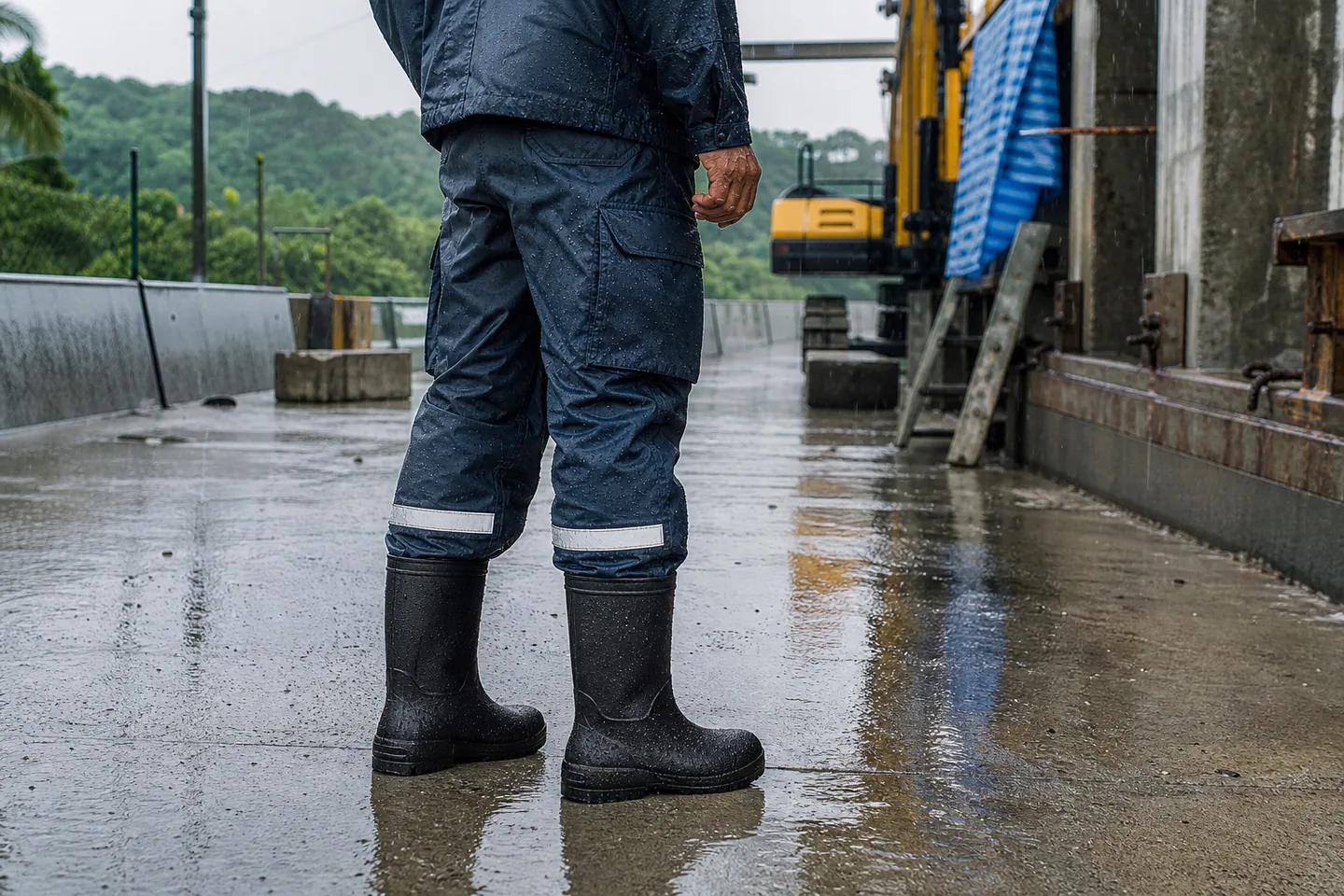
This is useful in Malaysia, Singapore, Thailand, the Philippines, Vietnam and Indonesia, where monsoon rain and wet outdoor work are common. It does not mean every waterproof-looking boot meets S6 or S7; the marking and certificate must confirm it.
P, PL and PS clarify puncture protection
The new markings distinguish insert type and test nail:
- P: metallic insert tested with a 4.5 mm nail
- PL: non-metallic insert tested with a 4.5 mm nail
- PS: non-metallic insert tested with a smaller 3.0 mm nail and specified result criteria
The change helps buyers compare steel midsoles with flexible textile or aramid-style inserts more accurately. No insert makes a shoe invulnerable to every sharp object; workplace housekeeping and engineering controls remain essential.
FO, WPA and SR need closer attention
Fuel-oil resistance is no longer automatically bundled into every class in the newer edition. Look for the separate FO marking where it matters. Water penetration and absorption of the upper is now identified as WPA, replacing the older WRU terminology. Slip requirements were revised, and SR identifies an additional slip test beyond the basic requirement.
Can old and new markings appear together in the market?
Yes. Certificates, national adoption timelines and existing approved models can differ. Malaysian buyers may see DOSH records referencing older MS ISO editions while newer approvals reference BS EN ISO 20345:2022 or EN ISO 20345:2022+A1:2024. This is why the exact certificate edition matters.
Use the standard as a selection language—not a shortcut. Start with the hazard assessment, then confirm the class, additional markings, local approval and physical product label. Safetyware Sdn. Bhd. can support technical document review for RHINO SHOE enquiries.
Safety footwear must be selected through a workplace risk assessment. Standards, certification and DOSH–SIRIM approval are model-specific; confirm current documentation before procurement.